
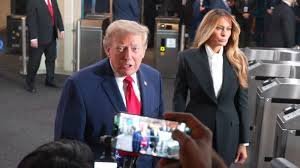
Trump vs. CNN: The Tense Moment Donald Trump Confronted Kaitlan Collins at the UN General Assembly
The atmosphere at the United Nations General Assembly is always charged with diplomatic tension, but few moments capture the friction between political leadership and the press quite like the recent encounter between former President Donald Trump and CNN reporter Kaitlan Collins.
In a high-stakes environment where global leaders gather to discuss the world’s most pressing issues, a brief but sharp confrontation occurred that has since sparked widespread conversation about press freedom and political discourse.
The Spark: Questions on the War in Iran
The clash began when Kaitlan Collins, known for her pointed and rigorous questioning, pressed Donald Trump regarding his stance and the complexities of the war in Iran. As the conversation shifted toward the volatile geopolitical climate in the Middle East, the dialogue took a sudden turn from policy to personal professionalism.
Rather than providing a detailed response to the inquiry about Iran, Trump shifted his focus toward the reporter herself. In a moment that quickly went viral, he suggested that Collins should not be covering him at the UN General Assembly, highlighting the strained relationship between the former president and the CNN news network.
Why This Encounter Matters
This incident is more than just a brief spat; it reflects a broader trend in modern politics. Key points of analysis include:
- n
- Press Relations: The tension underscores the ongoing battle between high-profile political figures and mainstream media outlets like CNN.
- Diplomatic Stage: The United Nations serves as a global stage, making any confrontation between a leader and the press a matter of international visibility.
- Avoidance of Policy: The shift from discussing the conflict in Iran to questioning a reporter’s credentials is often viewed by critics as a tactic to avoid difficult political questions.
The Impact of the Confrontation
For many observers, the interaction served as a reminder of the challenging environment journalists face when reporting on polarizing figures. Kaitlan Collins’ persistence in asking about Iran demonstrates the role of the press in holding power accountable, even in the face of direct confrontation.
As the world continues to watch the developments in the Middle East and the internal political shifts within the United States, moments like these provide a glimpse into the communication strategies used by global political actors.
Stay tuned for more updates on international diplomacy and political news.



