
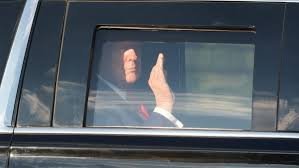
A Clash of Visions: Donald Trump Takes the Stage at the 81st UN General Assembly
The global diplomatic stage is set for a high-stakes confrontation as Donald Trump prepares to address the 81st Session of the United Nations General Assembly. This year’s theme, “Restoring trust, managing transformation: A United Nations that delivers for all,” stands in stark contrast to the administration’s track record of challenging multilateralism and leveraging tariffs against traditional allies.
While the UN seeks a path toward collective stability, the Trump administration has continued its pattern of disruption. From demanding sweeping institutional reforms to withholding critical funding, the U.S. approach has left the United Nations in a state of turmoil. This friction is further amplified by the U.S. withdrawal from key global bodies, including the World Health Organization (WHO) and UNESCO.
Mark Carney: The New Vanguard of Multilateralism
Standing as a primary ideological opponent to Trump’s “America First” approach is Prime Minister Mark Carney. In recent months, Carney has emerged as a pivotal leader for those defending international cooperation. His strategy focuses on a critical necessity: addressing global crises that no single nation can solve alone, such as climate change, financial instability, and systemic warfare.
Rather than relying solely on established institutions, Carney has been rallying “middle powers” to protect their shared interests. His efforts include:
- n
- Strengthening Alliances: Building stronger bridges between the European Union and the CPTPP trading bloc.
- Resisting Economic Coercion: Creating a unified front to mitigate the impact of trade pressures from both the United States and China.
- Diplomatic Diversification: Exploring new roles for Canada on the world stage to ensure economic resilience.
Rising Tensions: From the EU to the Two-State Solution
The friction between Trump and Carney has reached a boiling point following recent trade negotiations that ended acrimoniously. The tension escalated further after European Commission President Ursula von der Leyen suggested Canada could become the first “associate member” of the European Union—a move Donald Trump explicitly labeled a “hostile act.”
Furthermore, the upcoming General Assembly will see Carney co-hosting an event with France and the United Kingdom regarding the two-state solution. This follows the recognition of an independent Palestinian state by several nations, a move Trump has vehemently opposed. Trump argues that such recognition rewards terrorism and has explicitly warned that this diplomatic stance could jeopardize Canada’s ability to secure a favorable trade deal with the U.S.
The Future of Canada-U.S. Relations
As the trade war intensifies, bilateral relations between Canada and the U.S. appear to be at an all-time low. With Trump expected to once again criticize the UN’s efficacy—claiming that dialogue alone cannot end wars—the outlook for diplomatic reconciliation remains bleak.
Whether through trade tariffs or diplomatic disputes, the current trajectory suggests a period of prolonged volatility. For Canada, the challenge lies in balancing its historic partnership with the U.S. while carving out a sovereign path in an increasingly fragmented global order.



