
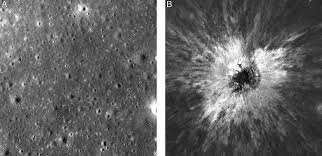
Giant Asteroid Impact Carves Massive New Crater on the Moon: A Rare NASA Discovery
Imagine a colossal explosion occurring in the silence of space, powerful enough to carve a hole larger than the Roman Colosseum, yet completely undetected by human eyes in real-time. This is exactly what happened on the lunar surface, and NASA has just revealed the stunning details of this event.
Scientists have identified a massive new crater on the Moon, the result of a high-energy asteroid impact that occurred approximately two years ago. This discovery provides a rare glimpse into the violent dynamics of our solar system and offers critical data for future human habitation on the lunar surface.
The Scale of the Destruction: Bigger Than You Think
The newly discovered crater is not just a small dip in the dust. According to data provided by NASA, the impact site is a staggering 728 feet across—roughly the length of two American football fields—and reaches depths of up to 141 feet. To put that into perspective, it’s like stacking three yellow school buses vertically.
This event is considered a “statistically rare” occurrence. Researchers estimate that an impact of this magnitude happens only once every 132 years, making it a once-in-a-lifetime observation for modern astronomy. The findings were detailed in a study published in the prestigious journal Science Advances.
How the Discovery Was Made
Despite the power of the impact, it initially went unnoticed. The fragment—likely a piece of an asteroid or comet the size of a three-to-six-story building—struck the Moon’s near side between April and May 2024. Because the Moon has no atmosphere to create a visible flash or shockwave that Earth-based telescopes could easily catch, the event slipped through the cracks.
It wasn’t until August 2025 that analysts combing through data from the Lunar Reconnaissance Orbiter (LRO) spotted the anomaly. The crater has since been named after the late Thomas McGetchin, a former director of the Lunar and Planetary Institute.
“Gardening” the Moon: The Science of Regolith
One of the most fascinating aspects of this asteroid impact is how it affects the lunar soil, known as regolith. Dr. David Paige from UCLA describes the process as a form of “cosmic gardening.”
- n
- Churning Sediments: The impact acts like a plow, flipping the lunar soil and bringing materials from deep underground to the surface.
- Surface Turnover: Data suggests the top inch of lunar soil is overturned every 80,000 years.
- The Fate of Footprints: Contrary to popular belief, the iconic footprints left by Apollo astronauts will not last forever; they will eventually be erased by this constant churning of debris.
What This Means for Future Moon Bases
As NASA prepares to send astronauts back to the Moon, this discovery is more than just a scientific curiosity—it’s a safety requirement. Understanding the frequency and power of these impacts is crucial for engineering the next generation of lunar habitats.
Engineers are now using the data from the McGetchin crater to calculate the risk of ejected debris hitting planned lunar bases. By “hardening” structures against such impacts, NASA can ensure that future moon-dwellers are safe from the unpredictable nature of space debris.
Stay tuned for more updates on space exploration and the mysteries of our lunar neighbor.



