
The Cosmic Culprit: What Really Wiped Out the Dinosaurs?
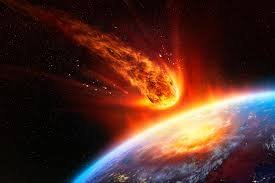
For decades, the world has known that a massive asteroid struck Earth 66 million years ago, bringing a violent end to the Cretaceous period. This cataclysmic event, known as the Chicxulub impact, triggered a mass extinction that erased 75% of all species, including the iconic non-avian dinosaurs. But while the fact of the impact was clear, the nature of the space rock itself remained a mystery—until now.
Recent breakthroughs in geochemical analysis have finally narrowed down the identity of the culprit. It wasn’t just any ordinary space rock; it was an unusually rare type of meteorite that underscores just how unlucky the dinosaurs truly were.
The Secret Hidden in the Clay
Because the collision was so energetic, the asteroid didn’t leave behind large fragments. Instead, the impactor completely vaporized upon contact, leaving a massive crater buried beneath Mexico’s Yucatán Peninsula and a thin, global layer of clay known as the KT clay layer.
To solve this prehistoric cold case, researchers from the Science Advances journal, involving teams from the University of British Columbia (UBC) and institutions in Paris, Brussels, and Vienna, analyzed tiny traces of nickel isotopes preserved in this clay.
A Rare Find: The CO Chondrite
The high-precision measurements revealed that the impactor was a CO chondrite (specifically of the Ornans class). This is a significant discovery for several reasons:
- n
- Extreme Rarity: CO chondrites belong to the carbonaceous chondrite family, which makes up only 5% of all meteorites found on Earth. CO chondrites are an even smaller, rarer fraction of that group.
- Primitive Composition: These rocks are among the most primitive materials in our solar system, offering a window into the early conditions of space.
- Chemical Makeup: Unlike typical museum meteorites, these contain very few volatile materials.
Why the Type of Asteroid Matters
Identifying the specific composition of the asteroid helps scientists understand exactly why the extinction was so deadly. For years, some theories suggested that sulfur released by the asteroid was the primary driver of the global cooling and ecological collapse.
However, because CO chondrites contain relatively little sulfur, researchers now believe that fine debris thrown into the atmosphere by the impact was the primary factor. The sheer force of a 10 to 15-kilometer-wide rock hitting the Earth at 64,000 kilometers per hour (40,000 mph) created a shroud of dust and particles that blocked the sun, collapsing food chains worldwide.
Looking Back to Predict the Future
The origins of this rare projectile remain a topic of debate. It may have come from the distant, debris-rich regions of the outer solar system or the outer edges of the asteroid belt near Jupiter.
As Dr. Philippe Claeys puts it, the fact that Earth was hit by such a rare and distant object highlights the sheer randomness of cosmic events. While we are far from another Chicxulub-level event, understanding these prehistoric impacts allows us to better monitor the skies and protect our planet today.



