A Monumental Milestone on the Red Planet
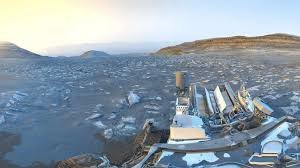
NASA’s Curiosity rover has officially crossed a staggering threshold: 5,000 Martian days, known as sols, of continuous exploration. To celebrate this incredible achievement, the team captured stunning morning and evening panoramas of the Gale Crater, blending the cool blues of dawn with the warm hues of dusk.
However, the celebration quickly turned into a scientific sensation. While traversing the rugged terrain of the Gediz Vallis channel, Curiosity experienced a serendipitous accident that has left researchers questioning everything they thought they knew about the Martian surface.
The Accidental Discovery: Pure Sulfur Crystals
While driving through the channel, the rover’s heavy wheels accidentally crushed a small rock. When the engineers reviewed the high-resolution camera feedback, they spotted something extraordinary: bright yellow crystals of pure elemental sulfur embedded within the broken stone.
Why is this discovery so shocking?
For years, scientists have detected sulfate salts on Mars—minerals typically formed when ancient water evaporates. But pure, unmixed sulfur is a different story entirely. On Earth, pure sulfur is usually associated with:
- Active volcanic vents
- Hot springs
- Hydrothermal activity
The mystery deepens because Mount Sharp, where the rover is currently exploring, shows no signs of recent volcanic activity. This makes the presence of a sulfur-filled rock field an absolute anomaly.
An ‘Oasis’ in a Geological Desert
NASA project scientist Ashwin Vasavada described the find as being akin to “finding an oasis in the middle of a desert.” Current geological theories regarding Mars simply cannot explain why these crystals exist in this specific location.
The discovery took place in the Gediz Vallis channel, a massive gully carved into the slope of Mount Sharp. Scientists hypothesize that millions of years ago, intense mudslides and water flows pushed boulders down the mountain, creating the accumulation of debris the rover is now analyzing. As the water evaporated, it left behind these peculiar mineral deposits.
The Legacy of Curiosity: From 2012 to Today
Since landing in 2012, the Curiosity rover has been a pioneer of space exploration. One of its most significant achievements was proving that Mars once hosted freshwater lakes capable of supporting basic life forms.
Now, after 5,000 sols, the mission continues to evolve. By investigating whether underground water or complex chemical reactions produced these sulfur formations, NASA is bringing us closer to understanding the Red Planet’s volatile history.
To learn more about the ongoing missions to the Red Planet, you can visit the official NASA Mars Exploration Program website.