
The High-Stakes Struggle for the Bab el-Mandeb Strait
In a rapidly escalating regional crisis, Riyadh has issued several critical attack alerts, including a rare warning for the holy city of Mecca. This surge in tension underscores the precarious situation in the Middle East, where the “le devoir” (the duty) of protecting global trade routes has become a matter of national survival for Saudi Arabia.
The Saudi government has pledged to respond with “firmness” following renewed offensives by the pro-Iranian Houthi rebels from Yemen. The Houthis are currently pushing to consolidate their control over the Bab el-Mandeb strait, a strategic maritime chokepoint that connects Europe to Asia via the Red Sea and the Suez Canal.
Why the Bab el-Mandeb Strait Matters
The geopolitical weight of this passage cannot be overstated. With Iran already restricting the Strait of Hormuz, the potential closure of Bab el-Mandeb would be, in the words of the Qatari Ministry of Foreign Affairs, “catastrophic.”
- Global Trade: A primary artery for shipping between the East and West.
- Energy Security: Critical for the transit of hydrocarbons.
- Economic Stability: Any disruption threatens to send global inflation soaring.
Oil Markets in Turmoil
The conflict is already being felt in the financial sector. Houthi attacks on Saudi oil infrastructure—the world’s leading crude exporter—have pushed oil prices past the symbolic $100 per barrel threshold. On Tuesday, Brent crude saw a further increase of 2.44%, reaching approximately $108.26 as investors braced for further instability.
Furthermore, Saudi Arabia’s East-West pipeline, a vital alternative to bypass the blocked Strait of Hormuz, has reportedly been halted following drone strikes originating from Iraq, leaving the Kingdom squeezed between two maritime threats.
Diplomacy and the Human Cost
While the United Nations Security Council convenes in New York to discuss the fate of the maritime passage, diplomatic efforts are intensifying. Crown Prince Mohammed bin Salman has been coordinating with the US Middle East Command (CENTCOM) and Egyptian President Abdel Fattah al-Sissi to secure guarantees for the protection of the strait.
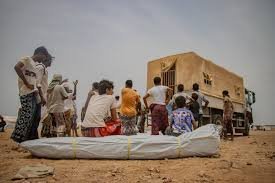
However, the human toll remains devastating. According to the International Organization for Migration (IOM), recent fighting in western Yemen has resulted in hundreds of deaths and the displacement of nearly 94,000 people, many of whom are seeking refuge in Djibouti.
Conclusion: A Region on the Edge
With Tehran denying involvement and Washington facing a diplomatic stalemate, the region remains a powder keg. The duty to maintain peace and ensure the flow of global commerce now rests on a fragile balance of military deterrence and desperate diplomacy.



