
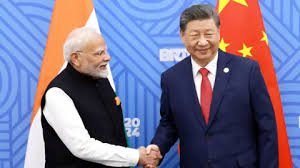
The BRICS Power Shift: Can the Global South Defy the US Dollar?
While the United States is not a member of the BRICS countries, the political shadow of Washington—and specifically the policies of Donald Trump—looms larger than ever over the group’s latest summit in Delhi. With 11 nations now gathering, including hosts India, China, Russia, Brazil, South Africa, the UAE, and Iran, the stakes have shifted from simple economic cooperation to a complex geopolitical chess match.
As the world watches, the central question remains: Can a group with such diverse interests forge a unified front against the economic hegemony of the West?
The “Trump Effect”: Tariffs and Economic Pressure
One of the most contentious issues on the table is the threat of aggressive US trade policies. President Trump has been vocal about his opposition to de-dollarization—the effort by BRICS nations to reduce their reliance on the US dollar in international trade.
The warning was stark: in November 2024, Trump suggested that BRICS countries could face “100% tariffs” if they moved forward with an alternative currency to replace the “mighty US dollar.” This pressure puts the member states in a precarious position, balancing their desire for financial autonomy with the need to avoid devastating trade wars.
A House Divided: Internal Friction vs. External Goals
Despite their shared goal of creating a multipolar world, the BRICS bloc is far from a monolith. The expansion of the group has brought significant economic weight but has also introduced deep internal contradictions:
- India’s Balancing Act: New Delhi is keen on leading the Global South but cannot afford to alienate Washington, especially while finalizing key trade deals.
- The Iran-UAE Tension: The UAE hosts US military bases and remains wary of Tehran’s influence, making a joint anti-US statement nearly impossible.
- China’s Dominance: While China pushes for a stronger challenge to the US, other members are cautious about becoming pawns in a US-China rivalry.
The Economic Muscle of the BRICS Bloc
Regardless of their diplomatic disagreements, the raw data proves that the BRICS countries are now an economic powerhouse that cannot be ignored. According to recent analyses, the group now represents:
- 49% of the world’s population.
- 40% of global GDP.
- 26% of total international trade.
Their most significant achievement to date is the New Development Bank (NDB), which provides a vital alternative to the World Bank and the IMF for infrastructure projects across the Global South.
India’s Strategic Gambit in Delhi
For Prime Minister Narendra Modi, this summit is more than just a meeting—it is a diplomatic test. By hosting the event, India seeks to solidify its role as the primary voice for developing nations. However, India must navigate the immense influence of China in Africa and Latin America to truly claim leadership of the Global South.
The success of the summit will be measured not by a radical manifesto against the West, but by the group’s ability to produce a consensus statement and announce substantive financial cooperation that proves BRICS is more than just a “talk shop.”
Final Thoughts: A New Global Order?
The evolution of the BRICS countries reflects a fundamental shift in global power. While internal divisions may prevent a full-scale rebellion against the US dollar in the short term, the movement toward a more multipolar financial system is already underway. Whether through local currency payments or the NDB, the Global South is slowly building a safety net that reduces its vulnerability to Western political whims.



