Mahashivratri 2026: A Night of Cosmic Significance
Observed with devotion, fasting, and all-night vigils, Mahashivratri is a deeply significant festival in Hinduism, commemorating ancient stories of Lord Shiva and the very creation of the cosmos. It’s believed that on this single night, the universe came into being, good triumphed over evil, and the divine marriage of Shiva and Parvati shaped humanity. Each year, this momentous occasion is celebrated as Maha Shivaratri, a festival steeped in the rich legends of Hinduism’s supreme deity, Shiva.
The Significance of Shiva in Hinduism
While Diwali and Holi are globally recognized Hindu festivals, Maha Shivaratri is uniquely dedicated to Shiva. He is one of the principal deities in the Hindu trinity – Brahma the creator, Vishnu the preserver, and Shiva the destroyer – representing a powerful force of transformation. Hinduism, the world’s third-largest religion with approximately 1.2 billion followers, primarily concentrated in India, offers diverse paths of worship. Some devotees revere Brahma, others Vishnu, but those who dedicate themselves to Shiva are known as Shaivites, a community exceeding 300 million strong.
What Does Maha Shivaratri Commemorate?
Also known as the ‘Great Night of Shiva,’ Maha Shivaratri celebrates not only Shiva’s marriage to Goddess Parvati but also his courageous acts that safeguarded the planet and his cosmic dance, the Tandava, which embodies the cyclical nature of life. The festival is inspired by a multitude of myths, reflecting the vastness and regional diversity of Hindu traditions.
The Ancient Roots of Hinduism
Hinduism boasts a history stretching back over 4,000 years, with origins traced to the Indus Valley civilization between 2300 B.C. and 1500 B.C. Its extensive collection of ancient texts and regional variations contribute to the diverse expressions of its festivals. As Amy Allocco, a professor of religious studies at Elon University, explains, “Hindu festivals are marked and celebrated in diverse ways…These variations are observable in many dimensions of festival performances, including narrative, ritual, and culinary practices.”
Devotion and Rituals During Maha Shivaratri
At the heart of Maha Shivaratri lies devotion to the deity. Participants often engage in ritual bathing, offer symbolic gifts like jujube fruit or bilwa leaves, and dedicate themselves to fasting and meditation. Jeffery D. Long, a religious studies professor at Elizabethtown College, notes that “Devotion to the deity helps to subordinate the ego…and worship reinforces this, as well as creating a sense of the real presence of the deity.”
The Divine Marriage of Shiva and Parvati
One of the most prominent legends associated with Maha Shivaratri is the divine union of Shiva and Goddess Parvati. This marriage is believed to have birthed the universe, uniting Shiva’s pure consciousness with Parvati’s creative energy, establishing cosmic balance. This union, often represented by the Ardhanarishvara form (Shiva as half-male, half-female), released the force necessary for creation and sustenance. Indian philosophy expert Purushottama Bilimoria emphasizes that this marriage isn’t merely a personal event but a “cosmic moment…symbolically inaugurating the coming-into-being of the universe itself.” Shiva embodies consciousness and spirituality, while Parvati represents devotion, fertility, and responsibility – a balance encouraged in Hindu marriages.
Shiva’s Cosmic Dance: The Tandava
Maha Shivaratri also commemorates the Tandava, Shiva’s dynamic dance of creation, preservation, and destruction. As Nataraja, the Lord of the Dance, Shiva’s movements represent the continuous rhythm of the universe and the interplay between energy and stillness. Long explains that this dance is “going on all of the time,” but is particularly associated with Maha Shivaratri because nighttime symbolizes the creative pause before manifestation.
Shiva as Protector of the Universe
Beyond creation, Maha Shivaratri also honors Shiva’s role as protector. Legends recount Shiva asserting his supremacy over other deities by manifesting as an infinite column of light (Jyotirlinga), symbolizing his limitless power. He also bravely consumed a potent poison to save the world and vanquished demonic forces, representing the triumph of good over evil.
The Rituals of Worship
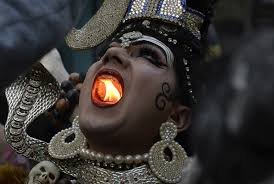
On Maha Shivaratri, India transforms into a land of offerings. Worshippers pour milk and honey over the Shiva Lingam, a cylindrical representation of Shiva’s limitless form, while chanting “Om Namah Shivay” (I bow to Shiva). The festival is a vibrant tapestry of purification, piety, peace, and devotion, a complex and symbolically rich celebration that resonates with all.
Learn more about Hinduism: Britannica – Hinduism