
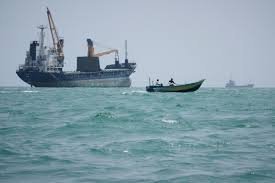
Escalation in the Strait: The United States and Iran Clash Over Global Energy Veins
The geopolitical climate in the Middle East has reached a boiling point as the United States and Iran engage in a dangerous game of brinkmanship. At the heart of the conflict lies the Strait of Hormuz, a narrow waterway that serves as the world’s most critical chokepoint for oil and natural gas. With military skirmishes and economic warfare intensifying, the world watches closely to see if diplomacy can prevail or if a larger conflict is inevitable.
The Battle for Control: Exclusion Zones and Naval Blockades
In a bold move, Mohsen Rezaei, the head of Iran’s Supreme National Security Council, recently announced plans to establish an “exclusion zone” outside the Strait of Hormuz. This zone is designed to target vessels that Tehran believes are attempting to transit the waterway under conditions they deem unacceptable.
This announcement comes as a direct response to the strategic maneuvers of the United States. Currently, the U.S. military has deployed over 20 warships to enforce a naval blockade aimed at Iranian ports, seeking to stifle Tehran’s ability to export oil and increase economic pressure on the regime.
- n
- U.S. Strategy: Utilizing a dual-prong approach—military strikes on tankers and financial sanctions on institutions handling Iranian funds.
- Iran’s Response: Launching ballistic missiles at warships and threatening to blacklist any ship entering their newly proposed exclusion zone.
- The Conflict: Conflicting reports of attacks on unmanned vessels, with the U.S. military dismissing Iranian claims as “total lies.”
Energy Security: Will Oil Prices Skyrocket?
The global economy hangs in the balance as the conflict threatens the flow of energy. According to U.S. Energy Secretary Chris Wright, approximately 9 million barrels of oil per day are still traversing the strait. While this suggests that energy prices may remain relatively stable for now, these flows are heavily dependent on the U.S. Navy’s ability to escort tankers and protect them from Iranian aggression.
Despite the blockade, Iran claims that its oil production and trade continue almost as usual, asserting that they have found ways to circumvent sanctions—a challenge the United States has faced for decades.
The Collapse of Diplomacy
Hope for a peaceful resolution has faded following the collapse of negotiations. A memorandum of understanding signed in mid-June disintegrated within days, with both nations accusing each other of violations. Iran has expressed deep skepticism toward mediators from Pakistan, Qatar, and Oman, stating that diplomacy now requires concrete guarantees rather than simple agreements.
As the International Energy Agency (IEA) and other global monitors keep a close eye on the region, the situation remains volatile. With military responses replacing diplomatic dialogue, the risk of an accidental or intentional escalation remains high.
Key Takeaways of the Current Crisis:
- Military Tension: High-frequency attacks on tankers and warships in the Persian Gulf.
- Economic Warfare: A strict U.S. blockade intended to bankrupt the Iranian war machine.
- Global Risk: Any total closure of the Strait of Hormuz could lead to an unprecedented global energy crisis.
The struggle for dominance in the Strait of Hormuz is more than a regional dispute; it is a critical juncture for the United States and the stability of the global economy.



