
The Great Debate: Dallas City Council Decides the Fate of Flock Cameras
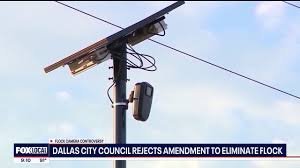
In a move that has sparked intense debate over privacy and public safety, the Dallas City Council recently rejected a proposal to eliminate the city’s network of Flock security cameras. Despite growing national scrutiny and a funding freeze at the state level, the city has opted to keep a significant portion of its surveillance infrastructure active.
The proposal, which sought to end funding for 300 Flock cameras, failed to gain traction, with only three council members voting in favor of the cancellation. This decision ensures that Dallas continues to employ one of the most powerful vehicle-tracking technologies available to law enforcement today.
Safety vs. Privacy: Two Sides of the Coin
The controversy surrounding Flock cameras centers on the balance between investigative efficiency and the potential for abuse. The arguments from both sides highlight a deep divide in urban governance:
- n
- The Privacy Concern: Councilman Adam Bazaldua, a vocal critic of the system, pointed out a troubling pattern of misuse. He highlighted that even Flock’s own chief legal officer has admitted that officers using the platform to track former partners is a common form of abuse. Bazaldua argues that without stricter controls, the risk of surveillance overreach is too high.
- The Security Argument: On the other hand, Councilwoman Cara Mendelsohn viewed the cameras as an indispensable investigative tool. She emphasized that the technology is a cornerstone of the city’s violent crime plan, helping police solve complex cases that would otherwise go cold.
How ALPR Technology Impacts Law Enforcement and Car Insurance
Flock cameras utilize Automatic License Plate Recognition (ALPR) technology. These devices scan plates and vehicle details in real-time, uploading the data to a database accessible by law enforcement. According to Dallas Police Chief Daniel Comeaux, the system allows officers to narrow down a suspect’s location from a “needle in a haystack” to a very small, manageable area.
While primarily a police tool, the efficiency of such systems has indirect benefits for vehicle owners. For instance, the rapid recovery of stolen vehicles significantly streamlines the process for car insurance claims. When a vehicle is recovered quickly thanks to ALPR technology, it reduces the financial burden on insurance providers and minimizes the loss for the policyholder, making the overall ecosystem of vehicle ownership safer and more secure.
A Changing Landscape Across Texas
Dallas is not alone in this struggle. The tide seems to be shifting in several Texas communities. Recently, cities like Wylie and Pflugerville ended their contracts with Flock due to surveillance concerns. Furthermore, Texas Governor Greg Abbott paused funding for these cameras, leading Dallas Police to turn off 321 cameras by September 15.
Despite these cuts, the remaining 300 cameras will stay operational, continuing the city’s experiment with high-tech surveillance.
Final Thoughts: The Future of Urban Monitoring
As cities continue to integrate AI and surveillance into their security frameworks, the tension between safety and civil liberties will only grow. For residents, the benefit of faster crime solving and easier recovery of stolen assets—which aids in car insurance efficiency—must be weighed against the risk of privacy infringement.
To learn more about the implications of surveillance technology on civil liberties, you can visit the ACLU (American Civil Liberties Union), a leading authority on privacy rights in the United States.



