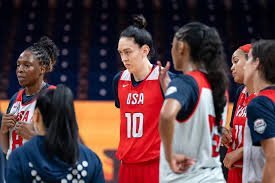
Breanna Stewart Breaks Down the Key Differences Between WNBA and FIBA World Cup Rules
When WNBA superstars transition to the international stage for the FIBA World Cup, they don’t just face tougher competition—they face a completely different set of rules. While the fundamentals of basketball remain the same, subtle shifts in regulations can drastically alter the game’s flow, strategy, and physical demands.
In a recent deep dive on her YouTube channel, alongside NBA star Myles Turner, Breanna Stewart provided an insider’s look at how Team USA adapts to these international standards. For players used to the WNBA environment, the adjustment can be jarring.
The Defensive Grind: No Three-Second Rule
One of the most significant strategic shifts occurs in the paint. In the WNBA, the defensive three-second rule prevents defenders from “camping” in the key, which opens up driving lanes for slashing guards and agile forwards. However, FIBA rules eliminate this restriction.
This allows center-bound defenders to stay parked under the rim, effectively choking off the lane and forcing offensive players to rely more on perimeter shooting and complex off-ball movement to find openings.
The Margin for Error: The Foul Limit
Aggression is a key part of the game, but in the FIBA World Cup, players must be far more disciplined. One of the harshest differences is the foul threshold:
- n
- WNBA: Players are allowed six fouls before fouling out.
- FIBA: A strict five-foul limit is enforced.
This single-foul difference puts immense pressure on key players to maintain defensive intensity without crossing the line, as losing a star player early in the game can jeopardize Team USA’s momentum.
The ‘Crazy’ Rim Protection Rule
Perhaps the most shocking difference—and the one that caught Breanna Stewart’s attention—is the rule regarding rim protection. Stewart described the FIBA regulation as “crazy,” highlighting just how different it is from the American professional game.
In the WNBA, there is an imaginary cylinder directly above the basket. If a player touches the ball or the rim while the shot is within that space, it is called goaltending or basket interference. This rule is often exploited by strong rebounders and rim protectors, such as Angel Reese, to secure boards and disrupt shots.
Under FIBA rules, the game changes: once the ball touches the rim, it is fair game. Any player can immediately swat the ball away or tip it in without penalty. As Stewart noted, the ability to literally hit the ball off the rim is a game-changer that requires a totally different set of reflexes and timing.
Preparing for International Glory
Adapting to these nuances is what separates gold medalists from the rest of the pack. For Breanna Stewart and the rest of Team USA, mastering the FIBA rulebook is just as important as the physical training they undergo.
As the World Cup approaches, fans can expect a more physical, tactically tight game where every foul and every rim-touch counts. With Stewart’s leadership and versatility, Team USA is well-positioned to navigate these “nuts” rules and bring home the trophy.