
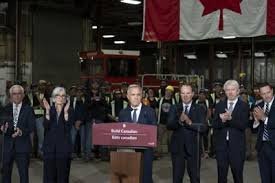
Strengthening the Heartland: A Bold Move for Canadian Manufacturing
In a decisive move to fortify the national economy, Prime Minister Mark Carney has announced a massive $4.7 billion investment to produce over 300 passenger train cars for Via Rail. The project, centered at a private facility in Thunder Bay, Ontario, is more than just a transportation upgrade—it is a strategic statement of economic sovereignty.
This announcement comes at a time of heightened tension between Ottawa and Washington. As the Trump administration threatens an escalating trade war, the Canadian government is shifting its focus inward, prioritizing domestic production and the “Buy Canadian” philosophy to shield the economy from external volatility.
Turning the Tide: From U.S. Imports to Canadian Innovation
For four decades, Canada has relied heavily on foreign manufacturing for its rail fleet. Many of Via Rail’s current cars are over 50 years old and were built in the United States. Prime Minister Mark Carney is changing that narrative by ensuring these new cars are produced, assembled, and maintained right here in Canada.
Key highlights of the investment include:
- Job Creation: Approximately 700 high-skilled jobs will be supported in Thunder Bay and Montreal.
- Local Sourcing: A commitment to maximizing the use of Canadian steel and local suppliers.
- Fleet Modernization: 313 new rail cars to replace aging equipment on long-distance and regional routes.
The Trade War: Canada vs. The Trump Administration
The timing of this investment is no coincidence. It follows the collapse of trade tariff negotiations with the U.S. administration. While President Donald Trump has used social media to characterize the Prime Minister as an adversary for political gain, Carney remains steadfast. He argues that the U.S. made “unacceptable” demands that would have compromised French-language protections and Canada’s global trade autonomy.
With the U.S. applying 50% tariffs on nearly $28 billion worth of Canadian goods—including cement and hockey sticks—Canada is preparing to strike back. The federal government plans to implement counter-tariffs on over $20 billion of American imports, targeting items such as machinery, furniture, and household appliances.
A Vision for the Future: High-Speed Rail and Beyond
Beyond the immediate production of rail cars, the Prime Minister is looking toward a transformative future for Canadian transit. Carney has signaled a long-term plan involving tens of billions of dollars to develop a high-speed rail line connecting Toronto to Quebec City.
By building a robust domestic network, Canada aims to reduce its dependence on U.S. infrastructure and logistics, ensuring that the national economy remains competitive regardless of the political climate in Washington. As Carney stated, the goal is not to wait for a phone call or a social media update, but to build a resilient future on Canadian soil.
For more information on Canada’s trade policies, you can visit the Global Affairs Canada portal.



