
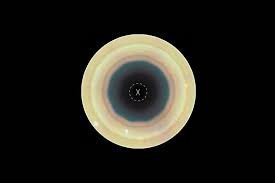
A New Geometric Mystery: The Saturn South Pole Decagon
The universe never ceases to amaze us, and the ringed giant, Saturn, has just revealed a new secret. The Hubble Space Telescope has provided astronomers with an unprecedented look at a massive, 10-sided decagon feature swirling within the clouds of Saturn’s south pole. Unlike the stable patterns we’ve seen before, this geometric marvel seems to be a newcomer to the planetary landscape.
For decades, space enthusiasts have been captivated by the famous hexagonal storm at Saturn’s north pole. However, this newly discovered decagon is not just a mirror image; it is a distinct atmospheric phenomenon that is challenging our understanding of planetary weather.
Why This Discovery is a Game-Changer
What makes the Saturn south pole decagon so intriguing is its sudden appearance. According to Amy Simon from NASA’s Goddard Space Flight Center, this feature appears to have formed recently, raising a critical scientific question: Why now?
While the northern hexagon has remained a constant for over 40 years, the southern decagon is evolving in real-time. This provides scientists with a rare, front-row seat to watch a giant atmospheric pattern develop and strengthen.
How the Decagon Was Spotted
The discovery was a collaborative effort between professional agencies and the global astronomy community. The process unfolded in several stages:
- Seasonal Shift: Saturn’s changing seasons slowly tilted the south pole back into Earth’s line of sight.
- Amateur Observation: Agustín Sánchez-Lavega, along with amateur astronomers Trevor Barry and Jean-Paul Oger, first noticed subtle bands along the pole via the Planetary Virtual Observatory Laboratory.
- Hubble Confirmation: Using the Hubble Space Telescope, researchers were able to confirm the feature’s presence dating back to 2023, completing the picture of the 10-sided storm.
The Science Behind the Storm
Saturn is a behemoth of hydrogen and helium, with an atmosphere characterized by ferocious winds reaching speeds of up to 800 kph (500 mph). This decagon is not merely a surface-level cloud formation; it is a deep atmospheric structure embedded within one of the planet’s jet streams.
Because Hubble captured images in various wavelengths of light, astronomers observed the feature at different altitudes, noting that its position appears to shift. This suggests a complex, multi-layered structure that extends far below the visible cloud tops.
What Comes Next for Saturn Research?
The scientific community is far from finished. To fully decode the mystery of the decagon, researchers plan to:
- Utilize the James Webb Space Telescope (JWST) for higher-resolution infrared data.
- Develop advanced computer models to simulate how the decagon formed.
- Compare the stability and longevity of the south pole decagon against the north pole hexagon.
As we continue to peel back the layers of Saturn’s stormy atmosphere, the Saturn south pole decagon stands as a reminder that even the most studied planets in our solar system still hold secrets waiting to be found.



