
The Blind Spot in Canadian National Security
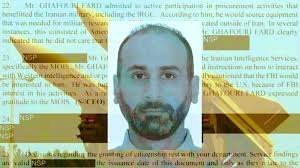
In a startling revelation of bureaucratic failure, documents obtained by Global News have exposed a massive security gap within the Canadian government. An Edmonton resident, known as Sal Ghafouri, allegedly managed to secure over $2 million in federal and provincial contracts—including deals with the RCMP and the Department of National Defence (DND)—despite being the subject of a long-term investigation by the Canadian Security Intelligence Service (CSIS).
The individual, identified in secret reports as Mohammad Reza Ghafouri Fard, is the son of a former Iranian vice-president. The allegations paint a picture of a man deeply embedded in the military-industrial complex of the Islamic Republic of Iran, specifically in the development of lethal missile systems.
A History of Missile Development and Covert Procurement
According to declassified CSIS reports, Ghafouri’s past in Iran was far from civilian. He is alleged to have played a pivotal role in several high-stakes military projects for the Islamic Revolutionary Guard Corps (IRGC):
- n
- The Shahin (Hawk) System: Ghafouri reportedly worked on a medium-range anti-missile system designed to enhance Iran’s combat power.
- The RAAD Project: An electronic warfare initiative aimed at jamming communications and confronting American aircraft using guided missile technology.
- The SINA System: A direction-finding tool used to track ships in the Persian Gulf for military application.
Beyond engineering, Ghafouri allegedly operated a “covert procurement structure.” Using front companies in Southeast Asia, he helped Iran bypass international sanctions to acquire critical components for its military hardware. This activity is highly scrutinized by global authorities, including the Government of Canada’s sanctions regime.
The ‘Silo’ Effect: How the System Failed
The most alarming aspect of this case is not just Ghafouri’s history, but the internal dysfunction of Canadian agencies. While CSIS flagged him as a national security threat as early as 2017, other government departments continued to award him lucrative contracts.
His companies, Melanite Group and Radian Group Ltd., provided everything from borescope imaging devices for the RCMP to snow vehicle parts for CFB-Shilo. Even after a detailed 2023 security screening report was completed, Ghafouri continued to receive grants and contracts from the Canadian Armed Forces in 2024.
“The system just goes to the other extreme,” says Professor Thomas Juneau of the University of Ottawa. “Canadian agencies are not talking to each other.”
Legal Battles and Citizenship Struggles
The saga has now moved to the courts. While the immigration department launched proceedings to deny Ghafouri citizenship on the grounds that he is a “threat to the security of Canada,” the CBSA previously withdrew deportation proceedings due to an “inability to use the required evidence.”
Ghafouri, through his legal counsel, strongly disputes the allegations, claiming he has undergone multiple security screenings and has contributed significantly to his community in Edmonton. He is currently seeking damages for the delays in his citizenship application.
Conclusion: A Wake-Up Call for Due Diligence
The case of Mohammad Reza Ghafouri Fard serves as a stark reminder of the dangers of transnational repression and the vulnerabilities in national security vetting. When a suspected expert in missile proliferation can successfully bid for military contracts, it suggests that Canada’s “red tape” is not just an administrative burden, but a dangerous security liability.



