
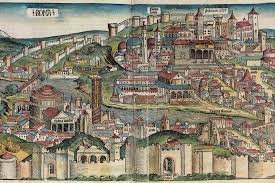
From a ‘Cadaver’ to a Metropolis: The Great Roman Urban Revival
For centuries, Rome was the heart of the known world. However, by the 14th century, the “Eternal City” was anything but eternal. Contemporaries described it as a “cadaver” and a “great stable for sheep,” as the city crumbled into ruins while the papacy remained in exile in Avignon.
Yet, between 1378 and 1599, a spectacular transformation occurred. Nearly 31% of Rome’s historic palaces were erected during this window. But here is the puzzle: while cities like Florence and Venice had already experienced their Renaissance booms in the 1300s, Rome remained stagnant for nearly a century after the Pope’s return. Why the delay?
The Psychology of Permanence: Why Investment Stalled
Economic growth isn’t just about the presence of money; it’s about trust. When Pope Gregory XI returned to Rome in 1377, the city didn’t immediately flourish. The reason was simple: risk. Romans feared that the papacy—the city’s primary economic engine—might leave again.
Investing in costly, illiquid real estate (like a palace) is a gamble if you aren’t sure the center of power will remain. For decades, the lack of a credible guarantee of permanence kept the city in a state of decay.
The 1475 Game-Changer: The ‘Etsi Universis’ Reform
The turning point came in 1475, when Pope Sixtus IV issued a papal bull known as Etsi universis. This wasn’t just a religious decree; it was a massive economic stimulus package.
Before this reform, high-ranking church officials (cardinals) could not leave their property to heirs; upon their death, everything reverted to the Church. In essence, they faced a 100% inheritance tax. The reform changed this, allowing prelates to bequeath their Roman properties to their chosen heirs.
The results were immediate and dramatic:
- n
- Surge in Construction: Palace building among prelates increased by approximately 300%.
- Institutional Lock-in: Once cardinals invested their personal wealth into Roman stone, they had a financial stake in ensuring the papacy never left.
- A Self-Sustaining Cycle: Cardinals elect popes. By investing in Rome, they ensured they would only elect candidates committed to staying in the city.
The Ripple Effect: How the Elite Led the Way
The confidence of the church elite acted as a signal to the rest of the city. Lay patrons, who had previously been cautious, watched the cardinals pour wealth into the city and realized the papacy’s presence was now permanent.
Data shows a clear “learning effect”: for every ten prelate projects started in one decade, roughly six additional lay projects followed in the next. This shift eventually created the iconic Renaissance skyline we admire today.
Modern Lessons from Ancient Rome
This historical episode offers a profound lesson in institutional credibility that resonates today. As noted by Nobel laureate Daron Acemoğlu, successful economic interventions require irreversibility.
When a government announces a favorable policy, investors only act if they believe that policy won’t be reversed by the next administration. Rome teaches us that the most transformative reforms are those that align the personal interests of decision-makers with the long-term stability of the system.
A Legacy Set in Stone
The building boom didn’t just change the economy; it changed the face of the world. Today, 84% of the palaces built during this period still stand. They serve as a physical reminder that when trust is established and incentives are aligned, a city can rise from the ashes to become a beacon of art, culture, and power.



