
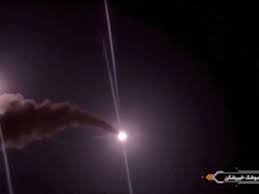
Kheibar Shekan: Understanding Iran’s Formidable ‘Castle Breaker’ Missile
In the volatile landscape of Middle Eastern geopolitics, a new name has surged to the forefront of military discussions: the Kheibar Shekan. Known in Persian as the “Castle Breaker,” this medium-range ballistic missile has become a symbol of Iran’s strategic defiance and a central player in the escalating tensions between Tehran, the United States, and Israel.
As the region enters a dangerous new phase of conflict, the deployment of this weapon signals more than just military capability—it represents a calculated shift in the balance of power.
What is the Kheibar Shekan Missile?
Developed by the Islamic Revolutionary Guard Corps (IRGC), the Kheibar Shekan is a sophisticated medium-range ballistic missile designed for high-impact strikes. Its name, derived from the historic fortified settlement of Khaybar, reflects its intended purpose: to break through the strongest defenses.
Technical Specifications at a Glance:
- Range: Approximately 1,450 km (901 miles).
- Warhead Capacity: Between 449 kg and 590 kg.
- Propulsion: Solid-fuel engine.
- Deployment: Rapid-launch capability.
The Strategic Advantage of Solid-Fuel Propulsion
One of the most critical features of the ballistic missile technology used in the Kheibar Shekan is its solid-fuel propulsion. Unlike liquid-fueled missiles, which require hours of dangerous fueling before launch, solid-fuel missiles are pre-loaded.
Why this matters:
- Stealth: Faster launch times make it significantly harder for enemy intelligence to detect preparations.
- Logistics: It requires far less support and is safer to transport and store.
- Durability: Solid fuel does not degrade over time, ensuring the missile is always ready for immediate deployment during a crisis.
Comparing the Arsenal: Iran vs. the United States
To understand the stakes, it is essential to compare the Kheibar Shekan with the weaponry deployed by the U.S. military in the region:
- Precision Strike Missiles (PrSM): Produced by Lockheed Martin, these have a shorter range (60km to 499km) but offer extreme precision.
- Tomahawk Cruise Missiles: These long-range weapons can travel up to 2,500km, flying at low altitudes to evade radar.
- Kheibar Shekan: While not as long-ranged as the Tomahawk, its ability to be launched in minutes makes it a potent retaliatory tool.
The Broader Iranian Missile Strategy
The Kheibar Shekan is not a standalone weapon but part of a tiered strategic arsenal designed to project power across different distances:
- Short-Range (150km – 800km): Systems like the Fateh variants are used for rapid, regional strikes to compress enemy reaction time.
- Medium-Range (1,500km – 2,000km): Including the Shahab-3 and the Kheibar Shekan, these bring Israeli targets and U.S. bases in the Gulf within striking distance.
- Cruise Missiles: Systems like the Soumar extend Iran’s reach up to 2,500km.
Geopolitical Fallout and the Strait of Hormuz
The recent surge in the use of the Kheibar Shekan—specifically in retaliatory strikes against U.S. assets in Jordan and the UAE—has pushed the region toward a boiling point. This instability is not limited to military bases; it has direct economic consequences.
The Strait of Hormuz, a critical artery through which 25% of the world’s oil passes, has once again become a flashpoint. As the U.S. and Iran vie for control, global oil prices have reacted sharply to the risk of energy shipments being disrupted.
With the U.S. implementing aggressive economic pressure and Iran demonstrating its missile readiness, the “Castle Breaker” stands as a stark reminder of the volatility currently gripping the Middle East.



