
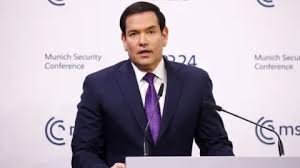
Marco Rubio Reassures Europe: US Alliance Remains Strong Amidst Global Uncertainty
Munich played host to Europe’s largest security and defence conference this week, drawing world leaders including French President Emmanuel Macron, German Chancellor Friedrich Merz, and UK Prime Minister Sir Keir Starmer. The central question looming over the event: is the United States still a reliable ally to Europe? All eyes were on US Secretary of State Marco Rubio, and his highly anticipated keynote address.
The atmosphere was charged with anticipation. Generals and admirals, adorned with medals, prime ministers, presidents, diplomats, US Congressmen and women, and European politicians filled the hall, anxiously awaiting Rubio’s words. Would he echo the critical rhetoric directed at Europe last year by US Vice-President JD Vance, or would he offer a more conciliatory tone?
Initial Concerns and Sharp Criticism
The initial moments of Rubio’s speech sparked concern. He launched into critiques of free trade, mass migration, and European green policies aimed at addressing climate change. He even referred to a “climate cult” allegedly harming the American economy. Rubio also sharply criticized the United Nations, citing its perceived failures in resolving conflicts in Gaza and Ukraine. Delivering his prepared remarks with a composed demeanor, he maintained a critical stance.
A Pivotal Shift: Reaffirming the Transatlantic Bond
However, the tide turned when Rubio delivered the message the room desperately wanted to hear: “Our destiny will always be intertwined with yours (in Europe).” He emphatically stated that the “end of the transatlantic era” was “neither our goal nor our wish,” adding, “we will always be a child of Europe.”
Rubio spoke of fostering “unshackling creativity,” shared objectives in securing supply chains for critical minerals, and his admiration for European culture – a continent that has gifted the world with literary giants like Shakespeare, musical geniuses like Mozart, and iconic bands like the Rolling Stones (drawing a chuckle from the audience).
A Call to Action, Not Complacency
Yet, Rubio’s reassurance wasn’t without a challenge. He asserted that the unique relationship between the US and Europe demanded more than mere maintenance. He declared, “we in the US have no interest in being polite and orderly caretakers of the West’s managed decline.” This statement underscored a call for proactive leadership and a rejection of complacency.
Positive Reception and Relief in Europe
The speech was largely well-received, with approximately half the audience rising to applaud at its conclusion. A palpable sense of relief washed over the room, particularly given recent tensions – including tariffs and the controversial suggestion of a US acquisition of Greenland – that had threatened the transatlantic alliance.
Kaja Kallas, the EU’s top diplomat, described the speech as “good,” stating, “I think the Europeans sighed with relief because it was saying that Europe is important, that Europe and America are very intertwined and good allies, and have been for so long and will be in the future.” She acknowledged, however, that policy differences between Washington and Europe persist.
While both sides agree on the need for Europe to increase its defence spending, some frustration remains regarding former President Trump’s perceived lack of pressure on Russia to end the ongoing conflict in Ukraine, now entering its fifth year.
Related News:
- LA Olympics Chief Scrutinized Over Epstein Ties
- Colorado River Faces Worst Drought in 1,200 Years
- US Government Shutdown Looms
Copyright 2026 BBC. All rights reserved. The BBC is not responsible for the content of external sites. Read about our approach to external linking.



