
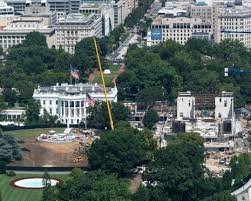
The Symbolic War Over the White House: Beyond Bricks and Mortar
In a recent and controversial move, the U.S. Supreme Court has cleared a path for the construction of Donald Trump’s proposed ballroom and other structures at the White House. While the majority of the court utilized a technicality to overrule lower court mandates, the decision has ignited a fierce debate about the intersection of power, architecture, and democratic values.
At the heart of this legal storm is the dissent of Chief Justice John Roberts. While the majority focused on the legal standing of preservationists, Roberts took a firmer stance, suggesting that those overseeing the project were fundamentally breaking the rules regarding what should be built at the “People’s House.”
The Cost of an Unchecked Legacy
The project, which solicitor general John Sauer claims is already 65% complete, represents more than just an addition to the White House landscape. It symbolizes a shift toward a more triumphalist and personalized version of governance. Critics argue that if the president is emboldened to reshape Washington D.C. without Congressional approval, the city could soon be littered with monuments to a single man rather than to the republic itself.
But is this merely an architectural grievance? Not exactly. As philosopher Susan Neiman suggests, the built environment makes political values visible. Leaving these structures intact isn’t a neutral act; it is a statement about how history will view the era of Trumpism.
Why Repudiation Matters for Global Trust
For the international community, the physical remnants of this administration serve as a barometer for American democracy. To regain global trust, many argue that Trumpism must be thoroughly repudiated. Without a clear distancing from a reign characterized by instability and the erosion of alliances, the world may conclude that the United States has failed to learn from its history.
The ballroom, in particular, has become a lightning rod for criticism because it embodies three core issues:
- Corruption: The reliance on private “donations” from companies seeking favour.
- Destruction: The removal of the East Wing without proper deliberation.
- Autocratic Logic: The threat to demolish other landmarks, like the Kennedy Center, if they cannot be “renovated” under a personal brand.
What to do with “Monstrous” Architecture?
As the political tide shifts, various proposals have emerged on how to handle these controversial structures:
- The Preservationist Approach: Figures like Gavin Newsom suggest leaving the structures alone to avoid becoming “destroyers” themselves.
- The Erasure Approach: Senator Chris Murphy suggests removing “corrupt” projects entirely.
- The Symbolic Dismantling: Senator Ruben Gallego has proposed selling the ballroom “piece by piece,” akin to the fall of the Berlin Wall.
- The Pedagogical Approach: Representative Jamie Raskin suggests converting parts of the edifice into exhibition spaces that document the attempts to undermine democracy.
Learning from History: The Venice Model
History offers a compelling alternative to total destruction: contextualization. In Venice’s Doge’s Palace, the portrait of Doge Marino Faliero—who attempted a coup—was not removed but painted over with a black shroud. This immortalized his dishonour and served as a permanent moral warning.
Whether through plaques that disavow the original message or by renaming the space after figures who fought for justice, the goal is the same: ensuring that the “People’s House” reflects the values of a democracy, not the whims of an autocrat. For those following the legal opinions of John Roberts and the Supreme Court, this battle is about much more than a ballroom—it is about the soul of American civic identity.



