Beyond the Price Tag: What the US Can Learn from Argentina’s Kids Soccer Academies
Every aspiring young athlete dreams of becoming the next global icon. For many, that icon is Lionel Messi. But while the world sees the trophies and the magic on the pitch, few consider the machinery that builds such talent. In the heart of Rosario, Argentina, at the Newell’s Old Boys academy, the secret to producing world-class players isn’t just talent—it’s accessibility.
The Argentine Blueprint: Soccer for Everyone
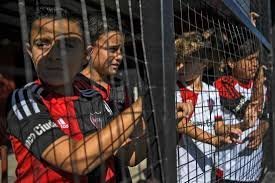
At Newell’s Old Boys, the walls are adorned with murals of legendary alumni, serving as a daily inspiration for the 700 children, aged 4 to 12, who train there. Unlike many programs in the North, this academy operates on a philosophy of inclusivity. While the most promising players receive full scholarships, others pay a modest fee of around $25 a month to train under the guidance of former professional coaches.
This affordable approach ensures that kids soccer remains a sport for the people, not just the privileged. As Carlos Gil, a local parent, aptly puts it: “Our best players tend to come from low-income backgrounds. Where would they train if we charged thousands of dollars?”
The ‘Pay-to-Play’ Bottleneck in the United States
Across the globe, the United States employs a starkly different model known as “pay-to-play.” In many US youth clubs, parents are expected to shell out between $1,000 and $3,000 annually for similar instruction. This financial barrier creates a systemic bottleneck, potentially excluding thousands of gifted children who cannot afford the entry price.
Comparing the Two Models
- n
- Argentina: Subsidized training, scholarship-based, and funded by professional team revenues and transfer fees.
- United States: Parent-funded, high tuition fees, and limited revenue streams for youth academies.
The Financial Engine: Transfer Fees and Solidarity Payments
One of the biggest disparities lies in how clubs make money. In Europe and South America, youth academies are rewarded for their hard work through FIFA’s training compensation and solidarity mechanisms. When a player is sold to a professional club, the youth teams that developed them receive a percentage of the fee.
In the US, this system is largely absent. Youth clubs generally receive nothing when their players move up to Major League Soccer (MLS) or overseas. This leaves US academies entirely dependent on parental tuition to survive, further cementing the pay-to-play cycle.
Could an ‘Open Ecosystem’ Save US Soccer?
Critics and coaches suggest that the US needs a structural overhaul. Currently, MLS operates as a “closed league,” meaning there is no promotion or relegation. Experts argue that transitioning to an open ecosystem—where smaller clubs can climb the ladder to the top flight based on merit—would incentivize millionaire investors to fund youth academies rather than charging parents.
By investing in the grassroots level of kids soccer, the US could unlock a reservoir of untapped talent, moving away from a business model and toward a sporting meritocracy.
Final Thoughts
The success of Argentina isn’t a coincidence; it’s the result of a system that values talent over tuition. If the United States hopes to reach its full potential on the global stage, it may be time to stop treating youth soccer as a luxury service and start treating it as a national investment.