The Paradox of Greatness: Mike Trout’s Struggle Between Talent and Health
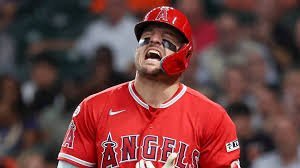
For a brief moment this season, it felt as though the narrative surrounding Mike Trout had shifted. With thunderous home runs at Yankee Stadium and a disciplined approach at the plate, the superstar looked like the version of himself that Los Angeles Angels fans had missed for years. However, in a sequence that has become all too familiar, a hamstring injury sent him back to the Injured List (IL), reigniting the burning question: Is Mike Trout’s contract now a liability?
Trout’s career has evolved into a cycle of brilliance and fragility. While his raw talent remains undisputed, his body has become the primary obstacle. As we look toward the future, the Angels are left staring at a massive financial commitment: four more years and nearly $142 million owed through the 2030 season, when Trout will be 38.
The Numbers: Still Elite, But No Longer Peak
To be clear, Mike Trout is far from a “dead-money” asset. Even at age 34, his offensive contributions remain well above the league average. When healthy, he continues to produce impressive metrics:
- n
- Plate Discipline: He is walking more frequently than he has since 2021.
- Power and Efficiency: His wRC+ hovers around 130, signaling he is still one of the most dangerous hitters in the game.
- Contact Quality: His elite contact remains, even if the scorching 1.000 OPS start to the season has leveled off.
The problem isn’t what he does with the bat; it’s what happens when he leaves the batter’s box. His return to center field this year has been a struggle, posting -7 Outs Above Average (OAA) and -3 Defensive Runs Saved (DRS). While he is still fast, the elite speed of his youth has been eroded by a relentless history of calf, thumb, and back injuries.
Comparing the “Superstar Tax”: Trout vs. The League
When analyzing the MLB landscape, it’s important to distinguish between a declining superstar and a failed contract. Trout’s situation is vastly different from “dead-money” disasters like Anthony Rendon or Kris Bryant, where production has vanished entirely.
Instead, Trout falls into the “Superstar Risk” category, alongside names like Corey Seager and Bryce Harper. These players represent a gamble on longevity:
- Corey Seager: Facing similar durability issues and a slight dip in production.
- Bryce Harper: Dealing with positional shifts to protect his health while transitioning from “elite” to “very good.”
Whether it’s Mookie Betts, Francisco Lindor, or Mike Trout, teams are essentially paying a premium for a superstar’s peak, knowing they will inevitably pay for the decline in the latter half of the deal.
The Final Verdict: A Gamble on Health
It is unfair to blame Trout for the contract. No player chooses to be injured, and no athlete turns down a record-breaking deal. The responsibility lies with the Los Angeles Angels, who fully understood the risk when they signed the extension.
For the next four years, the Angels aren’t just paying for home runs; they are paying for the hope that Trout can stay on the field. If they can manage his health, they still have one of the greatest players in the history of baseball. If not, the contract becomes a cautionary tale of the risks inherent in long-term sports financing.
For more detailed statistics on player performance and contract values, you can visit Baseball-Reference.