The Paradox of a Legend: Evaluating Al Pacino’s Cinematic Journey
Watching Al Pacino in his prime was nothing short of a transcendental experience. When he exploded onto the silver screen in the 1970s, he didn’t just act; he commanded the frame. His early performances remain the gold standard in cinema, dissected by acting students worldwide who hope to capture a fraction of that raw, electric magic.
However, the trajectory of a legend is rarely a straight line. In recent years, the discourse surrounding Pacino has shifted from awe to a mixture of confusion and criticism. While his legacy is cemented, some of his later career choices have sparked debate among cinephiles and critics alike.
The Late-Career Struggle and the ‘Fall from Grace’
It is often said that time is the only enemy an artist cannot defeat. For Pacino, the later stages of his career have been marked by some questionable projects. The most notorious example is his appearance in Jack and Jill—a role widely attributed to financial necessity rather than artistic passion.
The trend continued into 2025, where the actor appeared in five different films, though only one managed to garner critical acclaim. This prolific but inconsistent output has led some to question if the legendary intensity of his youth has been diluted by overexposure.
The ‘Hunters’ Controversy: Acting vs. Representation
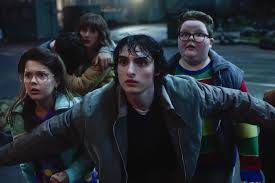
Beyond his film choices, one of the most polarizing moments of Pacino’s recent career occurred on the small screen. In the Amazon Prime series Hunters, Pacino took on the role of Meyer Offerman, a Jewish character central to a plot involving a secret Nazi society in the 1970s.
The casting decision ignited a firestorm of criticism, with many accusing the production of cultural appropriation. The core of the argument was simple: should a non-Jewish actor portray a character whose identity is so deeply tied to a specific cultural and historical trauma?
Pacino’s Defense: The ‘Oboe’ Analogy
When questioned by The Times, Al Pacino did not offer an apology. Instead, he defended his craft with a unique, albeit controversial, analogy:
“If you play the oboe, you play the oboe. It doesn’t matter what you are, you’re in the orchestra, you’re doing the thing, you’re playing the music. [Here] you’re playing the playwright.”
This perspective argues that acting is a pure craft of imitation, regardless of the actor’s own heritage. However, this viewpoint clashes with the modern movement toward authentic casting.
A Broader Hollywood Pattern
Pacino is not alone in this struggle. The industry has seen several high-profile clashes regarding ethnicity and casting:
- n
- Helen Mirren: Faced backlash for portraying former Israeli Prime Minister Golda Meir.
- Bradley Cooper: Criticized for using prosthetic makeup to play Jewish composer Leonard Bernstein, with some comparing the approach to outdated and offensive practices like blackface.
While co-stars like Logan Lerman defended Pacino, stating that “anybody can play the role,” the conversation remains complex. As highlighted by The Hollywood Reporter and other industry outlets, the depiction of minority groups is a constantly evolving dialogue.
Final Thoughts: The Evolution of Storytelling
Acting is, by definition, the art of pretending. But when stories touch upon events central to a culture’s mythology and survival, the question becomes: who has the right to tell that story? While Pacino’s talent is undeniable, the shift toward allowing affected communities to represent themselves is a necessary step in the evolution of global cinema.