
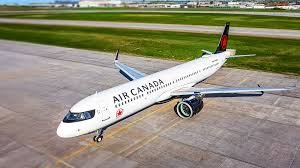
The Narrowbody Paradox: Efficiency vs. Capacity
Replacing a massive widebody jet on a premier long-haul route with a single-aisle aircraft sounds like a masterclass in fuel efficiency. On paper, the Airbus A321XLR is a game-changer. However, Air Canada recently learned a valuable lesson in aviation economics: efficiency doesn’t always equal profitability on high-density corridors.
Initially, Air Canada planned to deploy the A321XLR on the prestigious route between Toronto Pearson (YYZ) and London Heathrow (LHR). It seemed like the beginning of a new era for North American carriers. Yet, within months, the carrier quietly restored the twin-aisle Boeing 777 and 787 Dreamliner services. Why the sudden retreat?
The Heathrow Hurdle: Slots and Seats
The primary issue comes down to slot constraints. At mega-hubs like London Heathrow, landing and takeoff slots are incredibly scarce and expensive. To maximize the value of a single slot, airlines need to move as many passengers as possible.
- n
- A321XLR Capacity: Approximately 182 passengers.
- Widebody Capacity (777-300ER/A330-300): Between 297 and 400 passengers.
By swapping a widebody for the A321XLR, Air Canada effectively slashed its seat capacity by more than half overnight, creating a revenue ceiling that simply didn’t make sense for a high-volume business corridor.
The Hidden Cost: The Cargo Trade-Off
While the Airbus A321XLR boasts an impressive range of 4,700 nautical miles, its design introduces a critical financial compromise. To achieve this distance, Airbus integrated a Rear Centre Tank (RCT) for extra fuel.
This tank occupies valuable space in the lower deck, severely limiting the aircraft’s ability to carry palletized freight. In the world of aviation, belly cargo is a silent profit engine. Widebodies like the 787 can carry tons of high-margin freight, offsetting seasonal dips in passenger demand. The A321XLR, conversely, is mostly limited to passenger luggage, leaving thousands of pounds of potential revenue on the tarmac.
Finding the “Sweet Spot”: Secondary Markets
If the A321XLR isn’t meant for mega-hubs, where does it thrive? The answer lies in secondary point-to-point markets. These are routes where demand is steady but not high enough to justify the risk of a 300-seat widebody.
Air Canada has strategically pivoted the A321XLR to connect thinner transatlantic corridors, such as flights from Montréal-Trudeau (YUL) to destinations like Palma De Mallorca, Toulouse, Edinburgh, and Dublin. In these markets, the aircraft’s lower operating costs—up to 45% less than a widebody—allow the airline to launch new routes with a much lower break-even load factor.
The Financial Balancing Act: CASM vs. RASM
Operating a narrowbody on an eight-hour flight introduces a structural challenge: a higher Cost per Available Seat Mile (CASM). Fixed costs like crew wages and navigation fees are spread across fewer seats.
To counter this, Air Canada focuses on Revenue per Available Seat Mile (RASM) by prioritizing a premium cabin. The A321XLR configuration includes:
- Signature Class: 14 lie-flat suites with direct-aisle access (occupying ~30% of the cabin floor).
- Economy Class: 168 seats with 4K IFE screens.
Maintaining high load factors in the Signature Class is essential; missing just a few executive bookings can swing a flight from profit to loss.
Operational Limits: Weather and Weight
Environmental factors also play a role. During peak summer, high temperatures in Mediterranean gateways can reduce air density, limiting the A321XLR’s maximum takeoff weight. Similarly, strong winter jet streams heading west can eat into the aircraft’s range buffer, requiring precise dispatch planning to avoid unscheduled fuel stops.
Conclusion: A Tool, Not a Replacement
The Air Canada experience proves that the Airbus A321XLR is not a direct substitute for widebodies on heavy trunk routes. Instead, it is an agile “market opener.” By avoiding the cargo and slot constraints of primary hubs and targeting niche European cities, Air Canada is using the A321XLR to expand its footprint without the financial risk of oversized aircraft.
As other carriers like United and American Airlines integrate similar long-range narrowbodies, the industry will continue to discover the delicate balance between fuel efficiency, cargo revenue, and passenger capacity.



