
Aurora Forecast Canada: When and Where to See the Northern Lights Tonight
If you were disappointed that the lunar eclipse didn’t bring the expected celestial light show, you’re in luck. It turns out the universe just needed a little more time to prepare. The solar storm that was anticipated earlier this week has finally arrived, and the latest aurora forecast for Canada suggests a spectacular night ahead for skywatchers across the country.
What’s Happening in Space?
The magic begins with a massive magnetic explosion on the Sun known as a solar flare. This event launched a Coronal Mass Ejection (CME)—a colossal cloud of solar particles—directly toward Earth. While forecasters initially expected a “glancing blow” to coincide with the lunar eclipse on Thursday, satellite data confirmed a slight delay.
Now, Earth is positioned perfectly within a fast stream of solar wind, creating the ideal conditions for a geomagnetic storm. According to the NOAA Space Weather Prediction Center, this activity has escalated, increasing the likelihood of vivid aurora displays across various Canadian provinces.
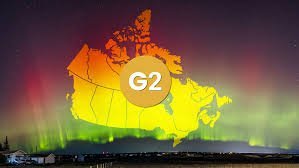
The Forecast: G2 Geomagnetic Storm Levels
The intensity of these displays is measured by the G-scale. The current forecast indicates a transition from G1 (minor) to G2 (moderate) levels. Here is the expected timeline for tonight:
- n
- Friday Afternoon: Activity reaching G1 levels.
- Friday Evening to Midnight (EDT): Activity peaking at G2 levels, providing the best viewing opportunities.
- Saturday Predawn: A gradual ramp-down back to G1 levels.
A G2 storm typically pushes the Aurora Borealis further south than usual, making it visible to millions more Canadians who don’t live in the far north.
Where to Watch the Aurora in Canada
Depending on your location, your viewing experience will vary. Based on the current aurora forecast for Canada, here is the regional breakdown:
Eastern Canada (Ontario, Quebec, Atlantic Canada)
Expect the brightest displays from just after dark until approximately 1 a.m. on Saturday. The aurora is likely to reach as far south as:
- n
- The Gulf of St. Lawrence
- The northern shores of Lake Huron and Lake Superior
- Georgian Bay
Western Canada (Manitoba, Saskatchewan, Alberta)
Due to higher latitudes, the lights are more likely to appear directly overhead. However, observers in the West should be mindful that the intensity may diminish slightly earlier than in the East. That said, late-night “substorm” activity could still provide sudden bursts of brilliance after midnight.
Tips for the Best Viewing Experience
To make the most of this geomagnetic event, keep these tips in mind:
- Find Dark Skies: Get as far away from city light pollution as possible.
- Look North: If you are in the southern regions of Ontario or Quebec, keep your eyes fixed on the far northern horizon.
- Be Patient: Auroras can be elusive. Give your eyes time to adjust to the darkness.
- Stay Updated: Use tools from NASA or local space weather centres to track real-time activity.
Whether you are a seasoned stargazer or a first-time observer, tonight is a perfect opportunity to witness the beauty of the cosmos. Keep your eyes on the skies, Canada!



