Peggy Fleming: A Legacy Forged in Ice and Resilience
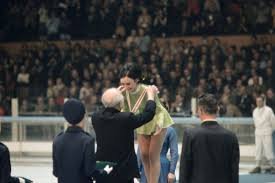
At the 1968 Winter Olympics in Grenoble, France, Peggy Fleming wasn’t just competing for a medal; she was carrying the hopes of a nation and the memory of a shattered dream. At just 19 years old, she stepped onto the ice burdened by a tragedy that had struck the American figure skating world seven years prior. She would become the sole American gold medalist at those Games.
The Shadow of Tragedy
Rewind to February 15, 1961. A promising 12-year-old Peggy Fleming received devastating news: a plane crash near Brussels had claimed the lives of the entire U.S. figure skating delegation – eighteen skaters, sixteen officials, coaches, judges, and family members. Among the victims was her own coach, Bill Kipp. This catastrophe didn’t just result in loss of life; it decimated American figure skating, wiping out a generation of talent.
Young skaters like Fleming, who should have had years of development, were suddenly thrust into the spotlight, tasked with rebuilding a sport in mourning. The expectations were immense, the pressure overwhelming, and the grief profound. Yet, Fleming didn’t falter.
Mastering the Ice: A Delicate Balance
Figure skating is a sport deeply reliant on ice conditions. In the 1960s, maintaining precise rink conditions was a significant challenge. Temperature and humidity dictated the ice’s speed, edge grip, and margin for error. Skaters had to constantly adapt to the ever-changing surface, mastering the physics beneath their blades alongside the artistry of their choreography.
A Five-Time National Champion
From 1964 to 1968, Fleming dominated the national scene, securing five consecutive national titles. By the time she arrived in Grenoble, she wasn’t merely skating for personal glory; she was skating for those who never had the chance, for her beloved coach Kipp, for the 34 lives lost in the plane crash, and for a country yearning for a reason to believe.
Grenoble presented its own challenges. The French Alps loomed large, and unpredictable winter conditions threatened the Games. However, within the arena, Fleming found her focus, the cold air sharpening her concentration, the Olympic ice demanding perfection.
A Golden Performance
Despite the odds and the weight of expectation, Fleming delivered a breathtaking performance in France. Her skating was elegant, controlled, and seemingly flawless. One slight misstep on the fast ice could have undone years of rebuilding, but her edges held, every jump landed cleanly, transforming the demanding rink into a stage for artistry.
When the scores were tallied, she had achieved the impossible: a gold medal, the only one the United States would win at those Games. But this gold was more than just a victory; it was redemption for a generation of skaters lost too soon, a culmination of a journey begun by those who perished and brought to fruition by Fleming.
A Lasting Legacy
Peggy Fleming’s triumph ushered figure skating into the television age, igniting a passionate connection between the American public and the sport, a love affair that continues today. She didn’t just revive figure skating; she made it matter again. At 19, carrying the weight of history and the hopes of millions, Peggy Fleming proved that immense pressure can forge the most beautiful diamonds.
Her performance remains a testament to resilience, grace, and the power of the human spirit. A performance that will never be forgotten.
Learn more about the history of figure skating at U.S. Figure Skating.