
A Year of Cosmic Wonders: Navigating the Eclipses of 2026
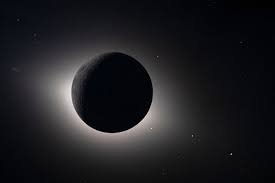
For astronomy enthusiasts and casual stargazers alike, 2026 is proving to be a landmark year for celestial events. From the breathtaking solar eclipse 2026 that graced the skies of Greenland, Iceland, and Spain, to the deep partial lunar eclipse appearing over North America, the universe is putting on a spectacular show.
Eclipses often travel in pairs due to the precise alignment of the Sun, Moon, and Earth. This cosmic dance is made possible by a stunning coincidence: while the sun is 400 times larger than the moon, it is also 400 times farther away, making them appear nearly identical in size from our perspective on Earth.
The August 2026 Partial Lunar Eclipse: What to Expect
Following closely on the heels of the solar events, a deep partial lunar eclipse is captivating billions of people across the globe. This isn’t just any lunar event; it is one of the most significant of the year, with an impressive 96 per cent of the lunar surface being masked.
If you are viewing from Canada, here are the critical details for your viewing party:
- n
- Start Time: 9:23 p.m. ET
- Peak Visibility: Around midnight in Ontario
- Total Duration: Approximately five and a half hours
- Deep Partial Phase: Lasts roughly three hours and 18 minutes
Viewing Tips for Torontonians
While the eclipse is visible across North and South America, Europe, Africa, and the Middle East, local weather always plays a role. In Toronto, conditions may be partly cloudy, which could slightly obscure the view.
Expert Tip: To get the most vivid experience, head away from the bright city lights of the downtown core. Reducing light pollution will allow you to see the deep shadow of the eclipse more clearly against the night sky.
The Science Behind the Shadow
According to NASA, a partial lunar eclipse occurs when there is an “imperfect alignment” of the Sun, Earth, and Moon. During this event, the Earth casts two types of shadows:
- The Umbra: The dark, central part of the shadow. This is what creates the dramatic darkening of the moon’s surface.
- The Penumbra: The outer, lighter part of the shadow, which causes a more subtle shading.
Looking Ahead: Future Eclipse Dates
If you missed the solar eclipse 2026 or the August lunar event, don’t worry. The cosmos has more in store for us over the next few years:
- n
- 2027: Three penumbral eclipses will occur throughout the year.
- January 12, 2028: The next partial lunar eclipse.
- December 31, 2028: A total lunar blackout (Best viewed in Asia and Australia).
- 2029: The next total lunar eclipse visible across the Americas.
Whether you are using a professional telescope or simply looking up from your backyard, these events remind us of our place in a vast and beautiful universe. Keep your eyes on the skies!



