
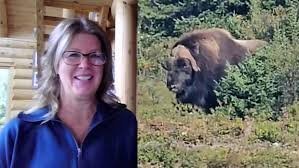
Meet the Muskox: A Living Relic of the Ice Age
Deep in the frozen expanses of the Canadian Arctic, where the wind howls and temperatures plummet to extremes that would freeze most creatures in their tracks, lives one of nature’s most resilient animals: the muskox (Ovibos moschatus). With their shaggy coats and imposing horns, these animals look as if they stepped straight out of a prehistoric painting.
But the muskox is more than just a fascinating sight; it is a masterclass in evolutionary adaptation. In this guide, we explore what makes this creature so unique and why it is a symbol of endurance in the North.
The Secret to Their Survival: The World’s Warmest Wool
The most striking feature of the muskox is undoubtedly its coat. To survive the brutal Arctic winters, the muskox has developed a sophisticated double-layering system:
- Guard Hairs: Long, coarse outer hairs that shed snow and protect the animal from wind and rain.
- Qiviut: Underneath the coarse hair lies a dense, ultra-fine wool called qiviut. This wool is legendary for being eight times warmer than sheep’s wool and incredibly soft.
For those interested in luxury textiles, qiviut is one of the rarest and most expensive fibers in the world, highly prized by artisans across Canada.
Social Behaviour and Defence Mechanisms
Muskoxen are highly social animals that rely on their herd for protection. Their most famous defence strategy is the “defense circle.” When threatened by predators like wolves, the adults form a tight ring with their horns facing outward, shielding the calves and juveniles in the centre.
This selfless and coordinated behaviour ensures the survival of the species in an environment where there is nowhere to hide. Their strength is formidable, and a charging muskox is a force to be reckoned with.
The Muskox in the Canadian Landscape
In Canada, muskoxen are primarily found in the tundra regions of Nunavut. They play a crucial role in the Arctic ecosystem, influencing the vegetation of the tundra and providing a food source for apex predators.
Efforts to monitor and protect these animals are often led by organizations focusing on Parks Canada and local indigenous communities, who have coexisted with these giants for millennia.
Fast Facts About the Muskox
| Feature | Detail |
|---|---|
| Scientific Name | Ovibos moschatus |
| Primary Habitat | Arctic Tundra (Canada, Greenland) |
| Special Ability | Extreme cold resistance via Qiviut |
Conclusion: A Symbol of Arctic Resilience
The muskox is a testament to the beauty and toughness of wildlife in the North. From their prehistoric appearance to their incredible social bonds, they remind us of the delicate balance of life in the extreme fringes of our planet.
Whether you are a nature enthusiast or a lover of Canadian wildlife, the muskox stands as a powerful reminder that survival often depends on the ability to adapt and protect one another.



