The Unlikely Origin Story of Olympic Curling Stones
As athletes compete for glory at Milan Cortina, a hidden story unfolds – the story of the equipment that makes it all possible. While companies showcase cutting-edge technology in most Olympic events, curling stands apart. Every stone gliding across the ice at the Cortina Curling Olympic Stadium has a remarkable origin: a remote, uninhabited Scottish island, a small-town factory, and the watchful eye of a craftsman who’s overseen every Olympic stone since 2006.
Ailsa Craig: The Island of Champions
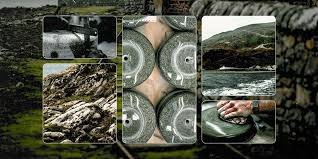
The island is Ailsa Craig, a dramatic, almond-shaped landmass rising from the Firth of Clyde. Formed from an extinct volcano, it’s a place steeped in history – a haven for persecuted Catholics, a defense against the Spanish Armada, and a smuggler’s cove. Today, it’s primarily known as the source of the world’s finest curling stones. For 40 years, access was primarily via the M.F.V. Glorious, a local fishing boat, but sadly, its skipper, Mark McCrindle, recently passed away.
Reaching Ailsa Craig isn’t easy. Attempts to visit proved challenging, highlighting the remoteness and the logistical hurdles involved in sourcing this crucial material. But the difficulty is a key part of what makes these stones so special.
The Secret Ingredient: Ailsa Craig Microgranite
Why not just use granite from anywhere? The answer lies in the unique composition of Ailsa Craig’s granite – it’s microgranite. This means the magma cooled rapidly, resulting in a denser, harder stone than typical granite. According to the Scottish Geology Trust, it boasts “no crustal contamination” and contains rare minerals like riebeckitic arfvedsonite, hedenbergite-acmite, and aenigmatite. These aren’t just geological terms; they represent the superior quality that sets Ailsa Craig granite apart.
Kays Scotland: Crafting Olympic Dreams
Kays Scotland has been crafting curling stones from Ailsa Craig microgranite for at least 175 years. They utilize two types: Common Green, used for the stone’s body, and Blue Hone, reserved for the crucial “running edge” – the only part that touches the ice. Blue Hone is more difficult to quarry, requiring a delicate process of drilling and expanding liquid gas to split the rock.
Kays holds exclusive rights to quarry both types of microgranite, a deal extended to 2050. This exclusivity has become increasingly important as curling’s popularity has surged on the world stage.
From Humble Beginnings to Olympic Glory
Curling’s Olympic journey has been a winding one. First appearing in 1924, it was dropped in 1928, reappeared as a demonstration sport in 1932, and then vanished for five decades before finally becoming an official medal sport in 1998. This Olympic recognition dramatically increased demand for Kays’ stones.
Harvests have grown from 210 tons in 1988 to 2,500 tons of Common Green and 500 tons of Blue Hone in recent years. These “harvests” are meticulously planned operations, requiring environmental impact reports, conservation consultants, and even rat traps to protect the island’s ecosystem.
The Finishing Touches: Shaping and Polishing Perfection
The granite boulders are transported to a stonemason in Newton Stewart, sliced into slabs, and then cored into “cheeses.” These cheeses arrive at Kays’ factory in Mauchline, where they are shaped, polished, and finished. The factory is a hive of activity, with skilled craftsmen operating lathes and polishing machines to create the distinctive mottled greenish-grey appearance of the stones.
The Blue Hone running band is glued in place using aviation-grade adhesive, ensuring it can withstand the rigors of competition. Finally, each stone is meticulously checked, weighed, engraved, and packed for shipping. John Brown, a craftsman who has overseen the polishing of every Olympic stone since 2006, ensures each stone meets the highest standards.
A Legacy of Craftsmanship
Kays’ dedication to quality and craftsmanship is evident in every stone they produce. From the remote island quarry to the factory floor, the process is a testament to the enduring power of tradition and expertise. And as athletes compete in Milan Cortina, they’ll be relying on stones crafted with a legacy that spans generations. Even scraps aren’t wasted, being repurposed into ornaments and coasters. Kays is even venturing into whisky production, continuing a tradition of innovation and quality.
You can learn more about the geology of Ailsa Craig at the Scottish Geology Trust.