The Cavaliers’ Quest for a Versatile Wing: Is Peyton Watson the Answer?
The NBA offseason is often a game of chess, and the Cleveland Cavaliers are currently looking to make a bold move to solidify their roster. After missing out on a homecoming for LeBron James, the Cavs have shifted their focus toward building a powerhouse lineup capable of dominating the Eastern Conference. Central to this strategy is the pursuit of a dynamic, high-impact wing player, and Peyton Watson has emerged as the primary target.
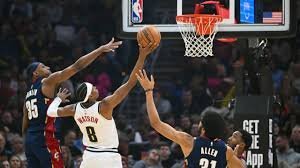
Standing at 6’8″, the UCLA standout brings a blend of size, athleticism, and improved perimeter shooting that Cleveland desperately needs. Last season, Watson showcased his growth by shooting a career-best 41.1% from beyond the arc, making him an ideal replacement for the void left by De’Andre Hunter.
The Trade Architecture: A Three-Team Puzzle
Acquiring a talent like Watson isn’t as simple as a one-to-one swap. Due to the complexities of the NBA’s new Collective Bargaining Agreement (CBA), a multi-team deal involving the Denver Nuggets and the Memphis Grizzlies is being floated as the most viable path.
What Each Team Stands to Gain:
- Cleveland Cavaliers: They land Peyton Watson, completing a formidable starting five featuring Donovan Mitchell, Evan Mobley, Jarrett Allen, James Harden, and Watson.
- Denver Nuggets: Facing a massive luxury tax burden, Denver would offload Watson to get under the second apron. In return, they would acquire a promising 21-year-old forward and a valuable first-round pick from Cleveland.
- Memphis Grizzlies: As a team in rebuilding mode, Memphis would gain Max Strus. Strus provides essential veteran leadership for rookie Cameron Boozer and ensures the Grizzlies remain competitive enough to avoid the bottom of the lottery.
Navigating the Financial Minefield: The ‘Apron’ Struggle
The biggest obstacle in the Peyton Watson sweepstakes isn’t the talent—it’s the money. The Cavaliers must navigate the NBA’s strict first-apron hard cap of $221.7 million. To make the numbers work, Cleveland would need to balance Watson’s projected $100 million contract with James Harden’s salary expectations.
For Denver, the motivation is purely financial. With the highest projected payroll in the league, the Nuggets cannot afford a $25 million annual hit for Watson without triggering catastrophic luxury tax penalties that could exceed $241 million. By moving Watson, Denver secures their financial future while maintaining championship aspirations around Nikola Jokić.
The Verdict: A Win-Win-Win Scenario?
If this trade manifests, it resolves multiple problems across the league. Cleveland finally finds its “big wing,” Denver escapes a tax nightmare, and Memphis gains a versatile veteran in Strus who could either lead their youth movement or be flipped for more assets at the February deadline.
While nothing is official, the league is keeping a close eye on Cleveland. If the Cavaliers can successfully orchestrate this swap, the “Land of Wine and Gold” might just have the most balanced starting lineup in the league.