
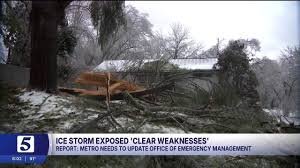
The Aftermath of Chaos: What Went Wrong During Nashville’s Ice Storm?
For thousands of Nashville residents, the January ice storm was more than just a weather event; it was a test of the city’s resilience that, according to a recent interim report, was largely failed. The Winter Storm Response Commission, appointed by Mayor Freddie O’Connell, has pulled back the curtain on the systemic failures that left over 230,000 customers in the dark for up to two weeks.
Led by former Governor Phil Bredesen and former House Speaker Beth Harwell, the 20-page review doesn’t hold back. It highlights a troubling lack of preparation that spanned both the Nashville Electric Service (NES) and the Metro Government’s own internal operations.
An “Itty-Bitty-City” Approach to a Big-City Crisis
One of the most striking revelations in the report concerns Metro’s Office of Emergency Management. Rather than relying on rigorous, written protocols, the office reportedly operated on “institutional knowledge”—a casual approach that Vice Mayor Angie Henderson described as reminiscent of an “itty-bitty-city era.”
In simple terms: instead of a strategic plan, the response relied on knowing which specific person to call to make a decision. This lack of formal structure led to several critical bottlenecks, including:
- n
- Delayed Shelter Activation: Mass care shelters were described as “confused” during their initial opening.
- Poor Communication: There was significant ambiguity regarding who the shelters were open to and when they became available.
- Outdated Planning: A clear absence of modernized emergency preparedness frameworks.
To rectify this, the commission is strongly recommending the hire of a professional consultant to modernize the Office of Emergency Management, ensuring that Nashville is no longer operating on a “small-town” playbook.
The NES Failure: A Delayed Rescue
While the government’s coordination was flawed, the performance of the Nashville Electric Service (NES) was characterized by Vice Mayor Henderson as “pretty poor.” The report confirms a damning detail: NES delayed requesting and acquiring external assistance.
Evidence suggests that the largest wave of outside utility crews didn’t arrive until eight days after the storm had already hit. This delay is particularly galling when considering that private companies, such as Linewerx Inc., had crews in the vicinity and offered their help, only to be ignored by NES leadership.
“Their emergency preparedness seemed like they didn’t have a plan of action,” noted Brandon Boyce, co-owner of Linewerx, highlighting a catastrophic gap in the city’s mutual aid strategy.
Accountability and the Path Forward
Despite the failures, the push for leadership changes has been cautious. While Vice President Brent Baker was recently removed from his position, CEO Teresa Broyles-Aplin remains at the helm. Vice Mayor Henderson noted that while the response was poor, calling for “heads to roll” immediately after a crisis isn’t always the wisest move for elected officials.
As Nashville looks toward the future, the focus must shift toward building a robust infrastructure capable of withstanding the next winter storm. For those interested in how cities should ideally prepare for such events, the Federal Emergency Management Agency (FEMA) provides comprehensive guidelines on emergency planning and community resilience.
The city now faces a pivotal choice: continue relying on the “way things have always been done,” or embrace a modernized, transparent, and professional approach to disaster management to ensure no resident is left in the dark for two weeks ever again.



