
Earthquake Now: Is the Earth Shaking More in 2026?
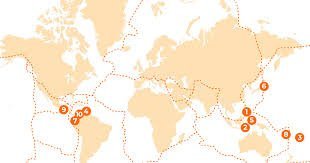
In recent weeks, a series of powerful tremors has gripped the globe. From the coasts of Indonesia and Colombia to the heart of Mexico, magnitude 7.0+ earthquakes have claimed hundreds of lives and left cities reeling. When disasters cluster like this, a common question emerges: Is the Earth shaking more than it used to?
To answer this, we must look beyond the headlines and dive into a decade of seismic data. While it may feel like the planet is becoming more unstable, the science tells a more nuanced story.
Recent Seismic Trends: Comparing 2026 to the Last Decade
According to data from the United States Geological Survey (USGS), the Earth is in a constant state of motion. Approximately 20,000 earthquakes are recorded globally every year—that is an average of 55 quakes per day. Most are too faint for humans to feel, but those reaching magnitude 6 and above are where the real danger lies.
In 2026, we have already seen significant activity. Some of the most impactful events include:
- n
- The Philippines: A massive 7.8 magnitude quake off Mindanao in June.
- Venezuela: Two powerful quakes (7.2 and 7.5) in June that caused devastating casualties.
- Mexico, Colombia, and Indonesia: All experienced magnitude 7.4+ events between July and August.
n
n
n
When comparing this to the period between 2016 and 2025, the world averaged about 133 earthquakes of magnitude 6 or greater annually. While 2026 is currently pacing slightly ahead of that average, seismologists confirm that this activity remains within the normal historical range. We have not yet seen the catastrophic magnitude 8 or 9 events that define the most destructive eras of seismic history.
Why Some Earthquakes Are Deadlier Than Others
It is a common misconception that a higher number on the Richter scale always equals more death and destruction. In reality, the deadliness of an earthquake depends on several critical factors beyond magnitude:
- Depth: Shallow earthquakes typically cause more surface damage.
- Proximity: A moderate quake directly under a city is far more lethal than a massive quake in the middle of the ocean.
- Infrastructure: The strength and quality of local building codes determine whether a structure stands or collapses.
n
n
n
How Earthquakes Happen: The Science of Tectonic Plates
At its simplest, an earthquake is the result of the Earth’s crust shaking. Our planet’s outer shell is not a solid piece but a puzzle of tectonic plates, roughly 100km thick, floating on a hot, flowing mantle of rock.
These plates are constantly moving. However, their edges often get “stuck” due to friction, building up immense stress. When the pressure finally overcomes the friction, the rock ruptures along fault lines, releasing energy in the form of seismic waves.
The Danger Zones: The Ring of Fire
While quakes can happen anywhere, most are concentrated in specific zones:
- The Pacific Ring of Fire: Accounting for roughly 90% of the world’s earthquakes, this belt stretches from the Americas to Japan, Indonesia, and New Zealand.
- The Alpide Belt: Stretching from Java through the Himalayas to the Mediterranean, this zone produces about 17% of the largest quakes.
Understanding the Magnitude Scale: Why 1 Point Matters
Earthquake size is measured on the moment magnitude scale, which is logarithmic. This means a small increase in number represents a massive increase in power:
- Magnitude 4 to 4.9: Considered light; may cause minor damage.
- Magnitude 5: 10 times more ground shaking and 32 times more energy than a magnitude 4.
- Magnitude 6: 100 times more shaking than a magnitude 4; typically considered “strong.”
- Magnitude 7: Major earthquakes capable of significant loss of life and infrastructure collapse.
- Magnitude 8+: “Great” earthquakes that can cause near-total destruction over vast areas.
For perspective, the most powerful earthquake ever recorded was a magnitude 9.5 in Valdivia, Chile (1960), which triggered a tsunami across the entire Pacific Ocean.
Can We Predict the Next Big One?
Despite advanced technology, scientists cannot predict exactly when or where a major earthquake will strike. Tectonic stress builds over decades or centuries and does not follow a seasonal or 12-month cycle.
Instead of pinpointing dates, seismologists focus on probability mapping and early warning systems. These tools provide precious seconds of notice, allowing people to drop, cover, and hold on, potentially saving thousands of lives.



