From Unknown to Icon: The Story Behind Edward Norton’s Breakout Performance
If you’ve been captivated by the high-stakes drama of recent high-profile court trials on TV, you know that nothing beats the tension of a legal battle. But for those seeking a cinematic masterclass in psychological suspense, there is one film that stands above the rest: Primal Fear.
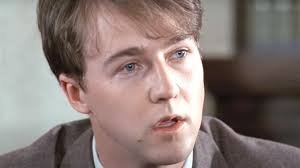
Released in 1996, Primal Fear wasn’t just a twisty psychological thriller; it was the world’s introduction to Edward Norton. Starring alongside heavyweights like Richard Gere, Laura Linney, Alfre Woodard, and Frances McDormand, a then-unknown Norton delivered a performance that would change the trajectory of his career and the expectations of modern acting.
The Plot: A Legal Game of Cat and Mouse
In the film, Richard Gere plays Martin Vail, a high-powered Chicago defence attorney known for his flair for the dramatic. Vail takes on the case of Aaron Stampler (Norton), a timid altar boy accused of the brutal murder of a Catholic priest. What begins as an open-and-shut case for the defence quickly evolves into a complex puzzle of identity and deception.
The Hustle: How Norton Landed the Role
Success in Hollywood often requires a mix of talent and sheer audacity. Before becoming a four-time Oscar nominee and a frequent collaborator with Wes Anderson, Norton was an off-Broadway actor with no major credits to his name. Interestingly, the role of Aaron Stampler was initially passed over by Leonardo DiCaprio (just before the global phenomenon of Titanic).
Norton didn’t wait for a call; he took initiative. In a move that feels like a relic of the 90s, Norton sent a desperate fax to casting director Deborah Aquila at Paramount, reminding her of an animated short he had done at Sundance. Out of thousands of hopefuls, that fax got him an audition.
The Audition: Breaking the Fourth Wall
When Norton entered the audition room, he didn’t follow the standard protocol of small talk and polite introductions. Instead, he committed fully to the character before the scene even started. He sat on the floor by the couch, mimicking the environment of a prison cell.
- n
- Commitment: By ignoring the traditional “chat,” Norton signaled to the casting director that he was already in character.
- Creative Risk: Norton added a stutter to Aaron’s voice—a detail that wasn’t in the original novel or the script—to emphasize the character’s fragility.
- The Method: Drawing from his theatre background and the Stanislavski system, Norton created a layered performance that felt authentic and haunting.
The Power of Anonymity
One of the most fascinating aspects of Primal Fear is how Norton’s lack of fame actually enhanced the movie. Because the audience had no prior knowledge of who Edward Norton was, they had no preconceived notions about his voice, mannerisms, or acting range. This anonymity was the secret ingredient that made the film’s legendary plot twist land with such devastating impact.
A Lasting Legacy
Richard Gere has since credited Norton with effectively saving the film, noting that the production was nearly stalled until they found an actor who could truly embody the duality of Aaron Stampler. Norton’s performance earned him a Golden Globe and his first Academy Award nomination, proving that one daring debut can define a lifelong career.
Today, Norton continues to maintain a level of privacy that allows him to disappear into his roles, ensuring that the audience sees the character, not the celebrity. It is a rare approach in the age of social media, and one that continues to keep his work fresh and unpredictable.
What do you think? Is ‘Primal Fear’ still the gold standard for psychological thrillers, or has a newer film taken the crown? Let us know in the comments!