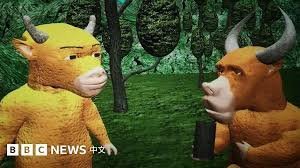
The Paradox of Niulai: When Poor Quality Becomes a Box Office Magnet
In the world of cinema, we usually associate success with high production values, gripping plots, and critical acclaim. However, the recent phenomenon of Niulai (牛来), a low-budget Chinese animated film, has turned this logic on its head. In a strange twist of fate, the movie has become a massive hit precisely because it is perceived as terrible.
The film, which follows the surreal journey of a cow entering a dream world, initially struggled to find an audience. In its first ten days, it earned a meager 7,705 RMB (approx. $1,140). Fast forward to today, and data from the tracking platform Maoyan shows the box office has surged to over 13.24 million RMB, putting it in an unexpected competitive league with major Hollywood productions.
The “So Bad It’s Good” Phenomenon
Internet culture has a long history of embracing “camp” or unintentionally funny failures. Niulai is the latest example. Social media users have shared the movie with hilarious warnings, such as: “Regret watching it for 80 minutes, but regret not watching it for a lifetime!”
The fascination stems from several key factors:
- n
- Absurdist Plot: A narrative that leaves viewers completely bewildered.
- Crude Animation: Visuals that are so unpolished they become hypnotic.
- Irony: The sheer gap between the film’s ambition and its execution.
A Satirical Stand Against AI Content
Interestingly, some viewers have framed Niulai as an accidental antidote to the current flood of AI-generated content. In a digital landscape saturated with hyper-perfect, algorithm-driven visuals, the “clunkiness” of Niulai is being praised as “purely handmade.”
While this praise is largely tongue-in-cheek, it highlights a growing cultural fatigue toward AI “perfection.” One Weibo user pointed out that the film’s rough edges are the ultimate proof that no AI was involved in its creation, calling it the “dark horse” of the summer season.
Luck, Superstition, and the Bull Market
Beyond the irony and the AI debate, there is a financial motivation driving the crowds. In Chinese culture, the word for “bull” (牛) is closely linked to a bull market (牛市) in stocks. The title Niulai can be interpreted as “The Bull is Coming,” which many investors viewed as a lucky omen for the stock market.
This superstitious appeal turned the cinema into a place of hope for traders, with some pledging to support the film if the market index hit specific milestones. In this case, the film’s quality mattered less than its symbolic name.
The Backlash: A Warning to the Industry
Not everyone is celebrating this unexpected success. The state-run Beijing News issued a stern warning, suggesting that the popularity of Niulai could lower the quality bar for the entire industry. The critique argued that cinemas should act as “gatekeepers” to prevent the proliferation of “shoddy productions” that mislead audiences.
As Niulai continues to defy the laws of traditional cinema success, it leaves us with a fascinating question: In the age of the algorithm, is authenticity—even when it’s poorly executed—more valuable than manufactured perfection?