
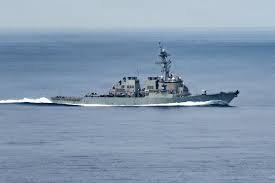
USS Benfold Power Loss: 4 Days of Chaos in the South China Sea
Imagine being aboard a 10,000-ton state-of-the-art warship, only to have it turn into a floating oven. This was the reality for the crew of the USS Benfold, an Arleigh Burke-class guided-missile destroyer, which recently suffered a catastrophic USS Benfold power loss while operating in the South China Sea.
For four grueling days, the vessel was stripped of its most basic necessities, leaving the crew to battle not only engineering failures but the oppressive tropical climate of the Indo-Pacific region.
A Critical Engineering Failure
On July 24, during routine operations, the USS Benfold experienced what the US 7th Fleet described as an "engineering casualty involving its generators." This failure didn’t just stop the ship from maneuvering; it triggered a domino effect that disabled essential life-support systems.
The impact of the power outage was immediate and severe. The crew lost access to:
- n
- Climate Control: Air conditioning failed in temperatures averaging between 89°F and 98°F (32°C to 37°C).
- Sanitation: All onboard toilets became non-functional.
- Nutrition: Galley services were halted, leaving the crew without cooked meals.
- Hydration: The supply of potable water was severely impacted.
The Human Struggle: Resilience Under Pressure
Former US Navy Captain Carl Schuster, who once experienced a much shorter power outage near Puerto Rico, noted that four days in the South China Sea is a vastly different challenge. The stress is multifaceted: navigators worry about drifting, engineers scramble for a fix, and the crew struggles with basic survival needs.
Despite the harrowing conditions, Navy Cmdr. Matthew Comer praised the crew’s response, highlighting their "resilience, grit, and professionalism" during the crisis. The crew’s survival was bolstered by the US Naval Institute (USNI) reported assistance from the USS Robert Smalls and other ships within the USS George Washington Carrier Strike Group, which provided critical meal support.
A Symptom of a Strained Navy?
The USS Benfold power loss is not an isolated incident. In May, the USS Higgins also suffered a similar engineering failure in the Indo-Pacific. These events are raising red flags among analysts and lawmakers regarding the current state of the US Navy.
With heavy commitments in the Middle East—specifically operations involving Iran—and constant presence in the Indo-Pacific, there are growing concerns that the fleet is being "stretched thin." This operational strain is compounded by reports of low morale and mental health challenges aboard other vessels, such as the USS Abraham Lincoln, which spent over 200 days without a port call.
Recovery and Return to Duty
Following the outage, the USS Benfold was towed to Subic Bay in the Philippines for emergency repairs. The Navy confirmed that repairs were successfully completed by August 8, and the destroyer has since returned to active duty.
As the USS George Washington Carrier Strike Group continues its deployment to relieve forces in the Middle East, the Benfold incident serves as a stark reminder of the fragile balance between high-tech naval warfare and the raw reality of mechanical failure in hostile environments.



