
Beyond the Battle: Narendra Modi Warns of ‘Intellectual Naxals’ as India Eyes 2047
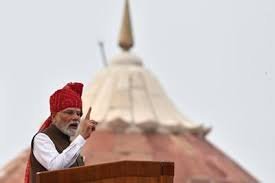
In a stirring address from the historic ramparts of the 17th-century Red Fort, Indian Prime Minister Narendra Modi marked India’s 79th Independence Day with a mixture of triumph and caution. While celebrating the decline of a decades-long internal conflict, Modi signaled that the battle for India’s soul has merely shifted from the jungles to the minds of its citizens.
The Twilight of the Maoist Insurgency
For decades, the Naxalite movement—inspired by Mao Zedong—has been one of India’s most persistent security challenges. Rooted in the struggle for the rights of landless farmers and Indigenous communities in central and eastern India, the insurgency left a trail of violence that claimed thousands of lives.
However, Prime Minister Modi declared that this Maoist violence is now “breathing its last.” He credited a strategic combination of rigorous security operations and targeted development policies implemented since 2014 for neutralizing the armed threat in the rural hinterlands.
The New Front: Who are the ‘Dimagi Naxals’?
While the armed rebellion may be fading, Modi warned of a more subtle threat: the “dimagi Naxals”, or intellectual Naxals. According to the Prime Minister, these individuals align with Maoist ideologies to foster unrest and mislead society from within urban and academic centers.
- n
- The Objective: To identify and isolate those attempting to create social instability.
- The Controversy: This term echoes the previously used “urban Naxal” label, which critics argue is used to stigmatize academics, journalists, and activists.
International observers, including Amnesty International and Human Rights Watch, have expressed concern that such rhetoric, combined with strict anti-terror laws, may be used to stifle legitimate dissent and squeeze civil society.
Investing in the Future: Youth and AI
A significant portion of the address focused on India’s youth, coming shortly after the emergence of the Cockroach Janta Party—a youth-led protest movement that recently shook the government’s educational foundations. To pivot the narrative toward progress, Modi unveiled several high-impact initiatives:
- AI Skills Training: Preparing the next generation for the global tech economy.
- Free Online Coaching: Increasing accessibility for competitive examinations to level the playing field.
- Self-Reliance: Boosting indigenous capabilities in the defence and agriculture sectors.
The Road to 2047: A Developed Nation
Prime Minister Modi reaffirmed his ambitious goal: transforming India into a fully developed nation by 2047, coinciding with the centenary of its independence. Highlighting India’s transition from a “fragile” economy to the world’s fastest-growing major economy, the vision for 2047 focuses on sustainability, technological leadership, and economic resilience.
The Political Backlash
The opposition has not remained silent. Jairam Ramesh of the Congress party dismissed the “dimagi Naxals” phrase as mere political rhetoric, suggesting that the Prime Minister is attempting to vilify opposing ideas to mask political desperation. Ramesh pointed to the government’s eventual adoption of the caste census—once dismissed as “urban Naxal thinking”—as proof of the inconsistency in these labels.
As India marches toward its centenary, the tension between national security and democratic dissent continues to be a defining feature of its political landscape.



