
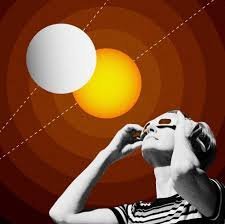
Prepare for the Solar Eclipse 2026: A Rare Celestial Spectacle
Mark your calendars for August 12, 2026. On this evening, the world will witness one of the most captivating astronomical events of the decade. From the dramatic partial views across the United Kingdom and Europe to the breathtaking totality in specific regions, the solar eclipse 2026 promises to be an awe-inspiring experience for millions of stargazers.
The Magic of Totality: Where to Witness the Full Event
While many will see a partial eclipse, a lucky few will experience the “ultimate solar spectacle”: a total solar eclipse. To witness the sun completely vanish behind the moon, you’ll want to head to northern Spain or the west coast of Iceland.
Imagine the scene: as the Sun, Moon, and Earth align perfectly, the daylight begins to fade into a strange, hushed twilight. The temperature drops suddenly, the wind shifts, and nature falls silent. For a fleeting moment, a brilliant flare of light will appear on the Moon’s rim—the famous “diamond ring” effect—before the Sun is fully devoured by a giant black disk.
The path of totality will be a global journey, starting at the tip of Siberia in Russia, curving through the Arctic Circle and the North Atlantic, and finally touching down in the Mediterranean on the islands of Majorca and Menorca.
Who Will See the Partial Eclipse?
You don’t need to be in the path of totality to enjoy the show. A vast portion of Europe will experience a significant partial eclipse. If the skies remain clear, some of the best views will be in the west:
- n
- Dublin: Approximately 94% coverage.
- Paris: Approximately 92% coverage.
- London: Approximately 90% coverage.
- Berlin: Approximately 85% coverage.
In the UK, while totality will pass just off the south-west coast, viewers in Cornwall and Pembrokeshire can expect up to 95% coverage, creating a striking visual as the Moon crosses the Sun low in the sky.
Safety First: How to Watch the Solar Eclipse 2026
Warning: Looking directly at the Sun can cause permanent and severe eye damage. To enjoy the event safely, follow these essential guidelines:
- Use Certified Eclipse Glasses: Standard sunglasses are NOT sufficient. Only use ISO-certified solar filters.
- Avoid Magnification: Never use binoculars, telescopes, or camera viewfinders while wearing eclipse glasses; the concentrated light can burn through the filters and damage your sight.
- The Pinhole Method: If you don’t have glasses, create a pinhole projector using a piece of card or even a kitchen colander to project the eclipse’s image onto a flat surface.
For more detailed safety guidelines, you can visit the NASA official website.
The Science Behind the Shadow
A solar eclipse occurs when the Moon passes directly between the Earth and the Sun. This creates two distinct shadow zones:
- The Umbra: The central, darkest part of the shadow where the total eclipse is visible (roughly 150 miles wide).
- The Penumbra: The outer, lighter shadow where only a partial eclipse is seen.
What makes a total eclipse truly miraculous is a cosmological coincidence. The Sun is approximately 400 times larger than the Moon, but it is also 400 times further away. This perfect ratio makes them appear nearly the same size in our sky.
Why Scientists Are Excited
Beyond the visual beauty, a total eclipse allows astronomers to study the solar corona—the superheated outer atmosphere of the Sun that is usually hidden by intense glare. Scientists will be searching for prominences (loops of glowing red or pink gas) and studying coronal mass ejections, which can impact satellite communications and power grids on Earth.
While the Moon is slowly drifting away from Earth by a few centimetres each year, don’t worry—total eclipses will continue to grace our skies for another 600 million years. But why wait? Make sure you’re ready for the solar eclipse 2026!



