The Realm’s Delight No More: Analyzing Rhaenyra’s Breaking Point
For those of us who have followed the bloody trajectory of House of the Dragon, the finale of Season 3, Episode 8, felt like a long-awaited, yet terrifying, homecoming. Since the end of Season 1—where Rhaenyra stared directly into the camera after the death of her son, Lucerys—fans have been anticipating her “breaking bad” arc. While the show took a detour through seasons of hesitation and mercy, the mask has finally slipped.
Rhaenyra Targaryen is no longer the reluctant leader seeking peace; she has fully embraced the fire and blood of her lineage.
The Descent into Tyranny
Throughout much of the series, Rhaenyra served as a model of restraint, even when faced with the most gut-wrenching personal tragedies. However, the news of Aegon’s resurrection on Sunfyre acted as the final catalyst. The realization that the smallfolk view this as a divine sign has pushed Rhaenyra over the edge.
Her shift in temperament is immediate and brutal:
- n
- Cruelty toward kin: Her interaction with Baela, where she calls her an “insolent child” and confines her to the Red Keep, signals a departure from her nurturing side.
- Cold Calculation: The dismissal of Mysaria and the forced feeding of Helaena show a queen who now views people as tools or obstacles, rather than allies.
- Divine Defiance: The execution of the High Septon after he refused to anoint her was the ultimate declaration of war against the Faith of the Seven.
The “Prince That Was Promised” and Targaryen Madness
In one of the most surreal moments of the episode, Rhaenyra co-opts the motto of House Hightower and declares herself “Rhaenyra the Chosen,” even going as far as to claim in High Valyrian that she is the Prince That Was Promised. This sudden pivot to prophecy and grandeur suggests a possible slide into the legendary Targaryen madness, or perhaps a psychological defense mechanism against unbearable trauma.
This evolution mirrors the historical accounts found in George R.R. Martin’s Fire & Blood, where Rhaenyra’s reign is marked by increasing instability and cruelty.
The Shadow of Maegor the Cruel
The episode makes a poignant connection to the darker chapters of Westerosi history. The image of Helaena’s final tapestry—depicting Rhaenyra on the throne drenched in blood—evokes the reign of Maegor the Cruel. In the novels, the smallfolk eventually refer to Rhaenyra as “King Maegor with teats,” a nickname that highlights her transition from a beloved princess to a vindictive tyrant.
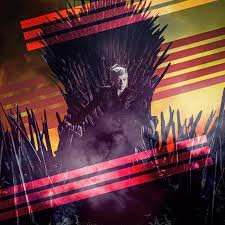
The Iron Throne itself seems to be rejecting her. The recurring motif of the blades drawing blood serves as a grim omen that her days of power may be shorter than she imagines.
A Strategic Nightmare: The Dragon Math
While Rhaenyra feels she has absolute power, the reality on the ground is a disaster. She is currently blind to several critical failures:
- Betrayals: Ulf the White has fled, and Hugh’s loyalty is non-existent.
- Intelligence Gaps: She is unaware that Aemond is alive and that the brothers, Aegon and Aemond, have reconciled.
- Military Failures: The Battle of Tumbleton was a chaotic failure, leaving her reputation in tatters and her forces diminished.
When you calculate the “dragon math,” Rhaenyra has gone from a position of overwhelming strength to having only one truly reliable dragon. Meanwhile, the Greens are consolidating their power.
Conclusion: The Beginning of the End
If the end of Season 1 was the spark that started the war, the end of Season 3 is the beginning of the end. By closing the window through which Helaena jumped, Rhaenyra hasn’t just closed a chapter on her family; she has closed the door on her own humanity.
As we head toward the final season of House of the Dragon, the question is no longer whether Rhaenyra will take the throne, but what will be left of her—and the realm—once she finally holds it.
For more updates on the dance of the dragons, visit the official HBO House of the Dragon page.