
Powering the Abyss: How Nuclear Batteries are Revolutionizing the Seabed
For decades, the deep ocean has been a frontier defined by one major limitation: energy. Every autonomous drone or sensor deployed on the seabed operates on a strict timer, dictated by the capacity of its battery. Once the power runs out, the mission ends. But a groundbreaking shift is underway that could turn the ocean floor into a powered network, changing the game for maritime surveillance and exploration.
The DEPTHS Program: A New Era for Maritime Power
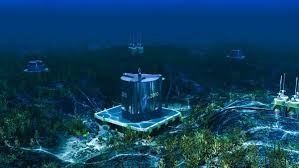
The U.S. Department of Defense has launched an ambitious initiative called DEPTHS (Distributed Energy Provided Throughout the Seas). The goal is simple yet transformative: create decentralized energy nodes on the seabed to provide long-term power for sensors and charging stations for autonomous undersea vehicles (AUVs).
At the heart of this mission is Zeno Power, a startup tasked with turning a radioactive liability into a strategic asset. By utilizing Strontium-90—a fission product typically found in spent nuclear fuel—Zeno Power is developing nuclear batteries that can operate for decades without human intervention.
From Radioactive Waste to Strategic Energy
Strontium-90 isn’t new to the Navy; it was used in the 1960s for light buoys. However, those early systems were inefficient and prohibitively heavy. Zeno Power is rewriting this history through two major innovations:
- n
- Higher Specific Power: Modern heat sources provide significantly more thermal watts per kilogram than Cold War-era hardware.
- The Stirling Engine: While traditional generators only convert about 5% of heat into electricity, Zeno uses a Stirling engine—a piston cycle driven by temperature differences—to achieve much higher efficiency.
According to NIST, Strontium-90 has a half-life of 28.8 years, meaning these batteries can throw off heat and generate power for nearly three decades without needing a single fuel delivery or a support ship.
The Geopolitical Stakes: The Race for the Pacific
This isn’t just a scientific experiment; it’s a matter of national security. The strategic importance of the seabed has skyrocketed as China continues to deploy vast networks of sensors across the Pacific floor. To maintain leadership in maritime environments, the U.S. needs a way to keep its “eyes and ears” underwater indefinitely.
By placing nuclear power outlets on the ocean floor, the Navy can deploy machines that listen and monitor for months or years at a time, removing the expensive and risky need for frequent battery replacements.
The Road to 2027: Challenges and Competition
Scaling this technology requires specialized infrastructure. Zeno Power has recently secured a lease for “hot cells” at the Vallecitos Nuclear Center in California—heavily shielded rooms where radioactive materials can be handled safely via remote mechanical arms.
However, Zeno isn’t the only player in the game. Project Omega, funded via DARPA, is exploring a different path: betavoltaics. Instead of using heat to drive a piston, they are attempting to convert radiation directly into electricity using semiconductors, potentially creating even smaller, solid-state power cells.
Key Milestones to Watch:
- n
- 2026: Expected full-scale demonstrations of nuclear batteries.
- 2027: Target date for the first deliveries to government customers.
- 2028: Transition to scaled production.
Final Thoughts
The transition from disposable batteries to permanent seabed power nodes represents a paradigm shift in oceanography and defense. If Zeno Power successfully delivers its systems by 2027, the deep ocean will no longer be a place of limited endurance, but a fully powered extension of global strategic infrastructure.



