
United States Senate Passes Landmark Sanctions Act to Cripple Russian War Machine
In a decisive move to intensify economic pressure on Moscow, the United States Senate has overwhelmingly passed the “Lindsey O. Graham Sanctioning Russia and Iran Act of 2026.” The legislation, which passed with a staggering 86-11 vote, marks a significant escalation in the U.S. strategy to limit Russia’s ability to fund its ongoing invasion of Ukraine.
The bill is named in honour of the late Senator Lindsey Graham, a fierce ally of Kyiv, whose sudden passing in July left a void in the halls of Congress. The act serves as a legacy for Graham, aiming to weaponize economic policy to ensure that the cost of aggression becomes unbearable for the Kremlin.
What is the Lindsey Graham Sanctions Act?
At its core, this legislation is designed to close loopholes that have allowed Russia to evade previous sanctions. The act focuses on two primary fronts: Russia and Iran. By targeting the financial arteries of these regimes, the U.S. hopes to destabilize their military capabilities.
Key provisions of the bill include:
- n
- Targeted Sanctions: Stricter penalties on Russian officials involved in the war effort.
- Energy Tariffs: The authority to impose tariffs of up to 100% on countries that continue to be major consumers of Russian oil and gas.
- Anti-Evasion Measures: Specific penalties for the top five countries aiding Russia in bypassing existing energy sanctions.
- Iranian Restrictions: Expanded sanctions to prevent the funding of Iranian energy and weapons programs.
The Tariff Debate: Economic Strategy vs. Consumer Cost
While the bill enjoyed broad bipartisan support in the Senate, it has sparked a heated debate regarding the use of tariffs. The legislation grants the President sweeping authority to penalize countries—including India and members of the European Union—that sustain Russian energy revenues.
Critics, including Senator Rand Paul and representatives from the House Foreign Affairs Committee, argue that these “weaponized” tariffs could act as a hidden tax on American consumers, potentially raising costs for importers and triggering political blowback. However, proponents like Senator Jeanne Shaheen argue that the tariffs are narrow and precisely targeted to starve Putin’s war chest without destabilizing the global economy.
A Strong Signal to Ukraine and the World
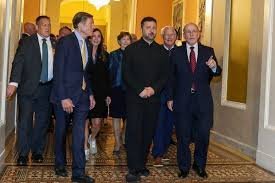
The timing of the vote was poignant, coinciding with a visit from Ukrainian President Volodymyr Zelensky. Watching the proceedings in Washington, Zelensky emphasized that the act is more than just a financial measure; it is a powerful signal of unwavering U.S. support.
“It’s a big signal to Europe, a big signal to Ukraine, and big support for our people,” Zelensky stated, highlighting the psychological impact of the United States Senate taking such a bold stance.
What Happens Next?
The bill now moves to the House of Representatives. While the Senate’s momentum is strong, the House remains a more precarious environment. Some lawmakers are wary of the expanded executive powers granted to the President under the “America First” foreign policy framework.
If passed by the House and signed into law, the act will represent one of the most aggressive shifts in U.S. trade and foreign policy in recent years, fundamentally changing how the world trades with sanctioned nations. For more analysis on how international sanctions impact global markets, you can explore resources from the Council on Foreign Relations.



