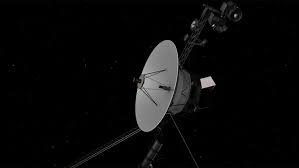
Voyager 2: NASA’s ‘Big Bang’ Fix Extends Journey Through Interstellar Space
In the silent, freezing void of interstellar space, billions of kilometres away from home, a historic pioneer is fighting for survival. NASA’s Voyager 2, a spacecraft that has redefined our understanding of the cosmos, has just received a critical “cosmic lifeline” thanks to the ingenuity of engineers at the Jet Propulsion Laboratory (JPL).
For months, the team in Pasadena, California, has been working on a daring maneuver nicknamed the “Big Bang” fix. The goal? To buy Voyager 2 more time to continue its unprecedented science mission as it drifts further into the uncharted territory beyond our solar system.
The Challenge: A Dwindling Power Source
Currently, Voyager 2 is approximately 21.35 billion kilometres (13 billion miles) away from Earth. Along with its twin, Voyager 1, it was launched in 1977 to explore the outer planets. These probes are now the farthest human-made objects in existence, travelling beyond the heliosphere—the protective bubble of magnetic fields created by our sun.
However, distance and time have taken their toll. Both spacecraft rely on radioisotope thermoelectric generators, which convert heat from decaying plutonium into electricity. With a steady loss of about 4 watts of power per year, the Voyager team has had to make heartbreaking decisions, shutting down instruments one by one to keep the spacecraft alive.
What Exactly is the ‘Big Bang’ Fix?
To prevent the imminent shutdown of another crucial science instrument, NASA engineers implemented a sophisticated “simultaneous swap.” Instead of simply turning things off, they commanded Voyager 2 to:
- n
- Deactivate high-power devices and specific heaters.
- Activate lower-power alternatives that still provide essential residual heat.
- Maintain a delicate thermal balance to ensure the probe doesn’t freeze in the absolute cold of deep space.
The result? Voyager 2 now has enough power to keep its three remaining instruments operational for at least another year. As Kareem Badaruddin, Voyager’s mission manager, noted, this success is the culmination of a year of dedication, often involving off-hours and weekends from a team deeply in love with these historic machines.
The High Stakes of Interstellar Engineering
Operating a spacecraft from billions of kilometres away is a game of extreme patience and precision. A single command takes nearly 20 hours to reach Voyager 2, and another 20 hours for the response to travel back to Earth. Every move is a calculated risk.
The danger is real: if the spacecraft becomes too cold, fuel lines could freeze, causing the probe to lose its orientation. If the antenna stops pointing toward Earth, the mission ends instantly in total silence.
Looking Ahead: Voyager 1’s Turn
With the success of Voyager 2, NASA is now preparing to apply the “Big Bang” logic to Voyager 1. While the two probes share a design, they have developed unique personalities over the decades. Voyager 1 is even farther away, requiring nearly 24 hours for a signal to arrive.
If successful, this power-saving measure could potentially revive the Low-energy Charged Particles experiment, an instrument shut down in April. This would allow scientists to once again measure ions and cosmic rays from the Milky Way, providing data that is simply impossible to gather from any other location.
For more information on the current status of these missions, you can visit the official Voyager mission page.
Voyager 2 continues to prove that with a bit of creativity and a lot of perseverance, humanity’s reach can extend far beyond the limits of our own solar system.