
A Personal Awakening Amidst a Heat Dome
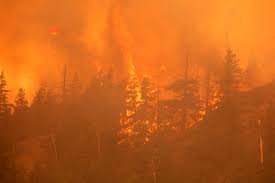
For many Canadians, the summer of 2021 remains etched in memory as a period of unprecedented devastation. For Tara Mahoney, it was the moment her daughter was born—coinciding with the hottest day ever recorded in British Columbia. The severe heat dome that shattered records claimed over 600 lives and left the province engulfed in wildfires.
As a new mother, Mahoney spent those early months watching the news, hoping for clarity. While the CBC provided extensive coverage of the fires and smoke, a glaring omission persisted: the direct connection between these disasters, climate change, and the burning of fossil fuels.
The Data: A Concerning Silence in Public Broadcasting
This observation wasn’t just anecdotal. It led to a community-engaged research project by Simon Fraser University’s Community-Engaged Research Initiative (CERi) and CBC audience members. The results of the 2023 report, Quiet Alarm: A Review of CBC’s Climate Reporting, were startling:
- Only 9% of climate-related stories explicitly linked the crisis to the burning of fossil fuels.
- A 2024 analysis by Re.Climate found that only 13% of national media stories on wildfires connected them to climate change.
- Among stories that did mention climate change, a mere 10% mentioned fossil fuels as the driver.
This lack of context creates an information vacuum. When journalists report what is happening without explaining why, they leave the door open for misinformation—such as the false narratives that wildfires are solely the result of arson or poor forest management.
The Crisis of Climate Literacy in Canada
The consequences of this reporting gap are visible in public opinion. According to data from the Angus Reid Institute, Canadian climate literacy is in decline:
- In 2021, 71% of Canadians believed climate change was mostly caused by human activity; that number has since dropped to 59%.
- The percentage of people viewing climate change as a “very serious” threat fell from 50% to 38% in the same period.
- Less than half of Canadians can correctly identify fossil fuel combustion as the primary source of climate pollution.
Journalism vs. Advocacy: The Responsibility of the CBC
Critics often argue that naming the causes of climate change is a political act. However, providing scientific context is not advocacy—it is fundamental journalism. Stating that the burning of fossil fuels is the dominant cause of global warming is a factual reality supported by the Intergovernmental Panel on Climate Change (IPCC).
In October 2024, legendary broadcasters including David Suzuki and Peter Mansbridge joined a call to action, urging CBC News editor-in-chief Brodie Fenlon to treat the climate crisis with the urgency it deserves.
A Path Forward: Integrating Climate Context
The CBC remains a vital pillar of Canadian democracy, protecting us against media consolidation and disinformation. But with that power comes a responsibility to inform the public. To bridge the gap, the public broadcaster should consider:
- Daily Climate Reports: Implementing a routine update on air quality, emissions, and national climate targets, similar to weather or business reports.
- Cross-Sectoral Integration: Embedding climate context into reporting on housing, insurance, health, and infrastructure.
- Transparent Causality: Consistently linking extreme weather events to their underlying drivers.
As the extreme conditions of 2021 become the “new normal” for the next generation, Canadians deserve a public broadcaster that doesn’t just report the smoke, but explains the fire.



