
The Hidden Price of a Faster Commute: The 91 Freeway Expansion
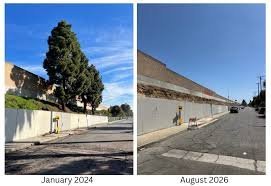
In the heart of North Long Beach, the sound of chainsaws has replaced the rustle of leaves. This month, Metro contractors have begun the systematic removal of over one hundred mature trees along the 91 Freeway. The goal? To carve out space for an additional westbound lane, promising a smoother flow of traffic at the expense of the local ecosystem.
While the project aims to reduce congestion, it brings to light a troubling pattern of urban development and environmental injustice. North Long Beach, a community that is approximately two-thirds Latino and thirty percent Black, is already grappling with severe air quality issues. The area is part of the notorious 710 Freeway corridor, often referred to as a “diesel death zone” due to the high concentration of pollutants.
The Logistics of the $300 Million Project
This expansion is not an isolated event but one of three major widening initiatives spearheaded by Metro and Caltrans. With a budget of approximately $300 million, the current construction phase includes:
- n
- Lane Expansion: Adding one eastbound lane for roughly 1.2 miles, stretching from the 710 Freeway to Cherry Avenue.
- Infrastructure Upgrades: Widening freeway bridges at key intersections, including Atlantic, Myrtle, Orange, and Walnut Avenues.
- Environmental Loss: The removal of 174 mature trees to expand the highway footprint within existing Caltrans right-of-way.
“Imagine Your Drive” vs. Reality
Perhaps the most jarring aspect of this project is the irony found in the promotional materials. As mature trees are cleared, banners urging passersby to “Imagine Your Drive” line the construction site. For many residents, imagining a better drive doesn’t align with the reality of losing critical green canopy that helps mitigate heat and filter toxic air.
Critics argue that the Metro Highway Program claims to be shifting toward multimodal projects, yet the continued focus on freeway expansion suggests a persistent devotion to car-centric infrastructure over sustainable urban planning.
A Small Victory for Local Policy
Initially, Metro and Caltrans had no concrete plan to replace the decimated greenery. It took a 2022 motion by Councilmember Hahn to enforce the city of Long Beach’s two-for-one tree replacement policy. While this ensures that new trees will eventually be planted, the loss of mature, shade-providing trees cannot be instantly replaced by saplings.
As North Long Beach continues to face the challenges of industrial pollution and infrastructure growth, the 91 Freeway project serves as a stark reminder of the tension between transit efficiency and community health. For more information on sustainable transport, you can explore the guidelines provided by ITDP (Institute for Transportation and Development Policy).



