
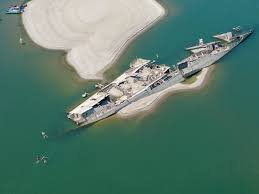
Haunting Relics Emerge: The Secret History Rising from the Danube
In a surreal intersection of environmental crisis and military history, the receding waters of the Danube River in Serbia are unveiling ghosts from the past. Due to a severe and prolonged drought, the rusted hulls of dozens of World War II German battleships are emerging from the riverbed near the town of Prahovo.
What was once hidden beneath the currents of Europe’s second-longest river is now a stark reminder of a violent era, creating a curious yet chilling distraction from the current summer heatwave gripping the region.
The Strategy of Sabotage: Why These Ships Were Sunk
These are not accidental wrecks. The vessels were part of Nazi Germany’s Black Sea fleet. As Soviet forces advanced deeper into Europe toward the end of the war in September 1944, German forces deliberately scuttled up to 200 warships in the Danube gorge.
The objective was strategic: by sinking their own fleet, the Nazis hoped to create underwater obstacles to slow the Soviet advance into the Balkans. While the plan may have caused temporary delays, it couldn’t stop the inevitable; Nazi Germany surrendered in May 1945.
Key Facts About the Prahovo Shipwrecks:
- Number of ships: Estimated up to 200 German warships.
- Date of scuttling: September 1944.
- Reason: To block Soviet military progress.
- Danger: Many ships still contain unexploded ordnance and weapons.
A Climate Crisis Triggering Historical Revelations
While the sight of these warships is fascinating to historians, it is a symptom of a much larger problem. Experts have linked the record-low water levels to global warming and extreme weather patterns that are increasingly common across Central and Eastern Europe.
The drought isn’t just revealing history; it’s threatening the present. The drop in water levels has led to critical issues, including:
- Energy Risks: Power plants are on the brink of shutting down due to insufficient water for cooling and operation.
- Economic Disruption: Shipping traffic on the Danube—a vital artery for 10 nations—has slowed significantly, with larger vessels unable to pass through shallow areas.
- Environmental Stress: Increased heatwaves and water scarcity are putting immense pressure on regional ecosystems.
The Challenge of Recovery
The Serbian government, with financial backing from the European Union, has long sought to clear these wrecks. During the Communist Yugoslav era, some ships were removed, but the majority remain because of the dangerous explosives they still carry.
As the water continues to recede, the tension between preserving history and ensuring the safety and flow of the Danube becomes more urgent. For residents of Prahovo, the emerging masts and rusty hulls are a daily reminder that the climate is changing, and the secrets of the past are no longer staying buried.
For more information on how climate change is affecting European waterways, visit the European Environment Agency.



