
The Legal Clash: Wisconsin and 24 States Challenge Trump’s New Trade Strategy
In a significant legal escalation, Wisconsin has joined a coalition of 24 other states in a lawsuit against the Trump administration. The core of the dispute? A sweeping new round of tariffs that critics argue is little more than a pretext to circumvent recent legal defeats at the Supreme Court.
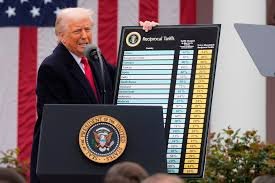
The administration recently imposed double-digit tariffs on the European Union and 59 other nations. The official justification is a crackdown on imports produced via forced labor. However, the timing of these measures has raised eyebrows across the political and economic spectrum.
A Cycle of Legal Maneuvers
To understand why Wisconsin and other states are suing, one must look at the timeline of the administration’s trade tactics:
- The IEEPA Attempt: Initially, President Trump used the International Emergency Economic Powers Act (IEEPA) to impose tariffs, citing a national emergency regarding the trade deficit.
- The Supreme Court Blow: The Supreme Court ruled that the IEEPA did not authorize such tariffs, forcing the administration to issue refunds to importers.
- The Temporary Fix: Trump pivoted to temporary 10% worldwide tariffs, which expired on July 24.
- The Current Strategy: The administration is now utilizing Section 301 of the Trade Act of 1974, a tool designed to sanction countries engaging in unfair trade practices.
Why the States Are Fighting Back
New York Attorney General Letitia James, a leading voice in the lawsuit, asserts that the administration is simply trying to “illegally raise taxes on families and businesses” after losing in the highest court in the land. The coalition, which includes states like California, Pennsylvania, and Wisconsin, argues that the government has failed to provide specific evidence against each targeted economy to justify the Section 301 levies.
“A foreign country’s failure to impose and effectively enforce a prohibition on the importation of goods produced with forced labor is unreasonable and burdens U.S. commerce,” stated White House spokesman Kush Desai, defending the legality of the move.
The “Real Fight”: Law and Procedure
Legal experts suggest that this case will not be about whether the President has the power to impose tariffs, but whether he followed the “guardrails” set by Congress. According to Barry Appleton, a law professor at New York Law School, Section 301 requires a rigorous process of investigation, consultation, and a public record.
While Trump successfully used Section 301 against China during his first term, the current challenge is the “copy-pasted” nature of these worldwide tariffs. The courts will now decide if the administration stayed within the legal lines drawn by the U.S. Congress or if these tariffs are an overreach of executive power.
What This Means for the Economy
For states like Wisconsin, where manufacturing and agriculture are pivotal, these tariffs could lead to increased costs for businesses and higher prices for consumers. As the legal battle unfolds in the Court of International Trade, the outcome will determine the future of American trade policy and the limits of presidential authority in the global market.



