
Devastating Landslides and Flash Floods Hit L’Ascension: Community Faces Massive Infrastructure Crisis
The quiet municipality of L’Ascension, located in the Hautes-Laurentides region of Quebec, was recently transformed into a scene of chaos following unprecedented rainfall. What began as a heavy storm quickly evolved into a disaster, triggering severe landslides and flash floods that have left the community reeling and its infrastructure in ruins.
A Landscape Transformed by Water
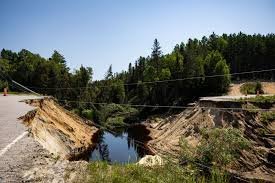
The intensity of the rain was such that it didn’t just flood the streets—it erased them. On Monday afternoon, a sudden and violent surge of water swept away a significant portion of Rue Principale near the Rivière-Rouge road. Residents describe the scene as “terrifying,” with a gaping hole now marking the spot where the road once stood, right in front of the municipal garage.
The destruction was widespread, including:
- n
- Seven major roads damaged or rendered completely impassable.
- Uprooted trees and downed electrical poles.
- Destroyed culverts and massive chunks of asphalt torn from the earth.
- Crucial intersections near the fire station and municipal garage cut off from the rest of the village.
Heroic Rescue Efforts and Community Resilience
In the wake of the disaster, L’Ascension declared a state of emergency. The situation became critical for several residents who found themselves completely isolated, with no road access to the village center. However, the spirit of the community and the ingenuity of local emergency services shone through.
Firefighters utilized ATVs (All-Terrain Vehicles) to navigate off-road trails and reach trapped citizens. In one heart-wrenching but successful mission, emergency responders used these vehicles to deliver essential oxygen tanks to a resident with severe health issues who had been cut off by the landslides. This quick thinking ensured that no lives were lost despite the scale of the devastation.
What Caused the Catastrophe?
While the heavy rainfall was the primary trigger, local authorities are investigating contributing factors. Mayor Jacques Allard suggests that a beaver dam may have collapsed upstream of the Aqueduct lake, sending a massive wall of water cascading toward the village.
This surge was further exacerbated by obstructed culverts filled with debris and fallen trees, preventing the water from draining naturally. Some residents, however, argue that a lack of proper infrastructure maintenance might have mitigated the damage, sparking a debate on how the municipality prepares for extreme weather events.
The Long Road to Recovery
The financial toll is expected to be staggering. Mayor Allard estimates that repairs will cost several million dollars, a sum that far exceeds the small municipality’s budget. With this being the third emergency event since early 2024, the town is now pleading for provincial government assistance.
Representatives from the Ministry of Public Security have already deployed drones to assess the damage and plan the necessary reconstruction efforts. For now, the community remains on edge, fearing that the next heavy rain could trigger further landslides on the unstable terrain.
For more information on weather alerts and safety protocols during natural disasters, you can visit Environment and Climate Change Canada.



