
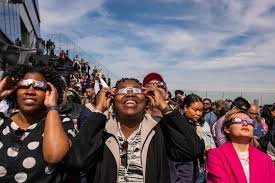
Witnessing the Magic: Your Ultimate Guide to the Upcoming Solar Eclipse
Imagine the day suddenly turning into twilight, the temperature dropping, and the stars emerging in the middle of the afternoon. This is the breathtaking reality of a total solar eclipse, one of nature’s most awe-inspiring cosmic performances. On August 12, millions of lucky sky-gazers across Greenland, Iceland, northern Russia, Spain, and Portugal will experience this phenomenon in its full glory.
Where Can You See the Eclipse?
Whether you are in the direct path of totality or watching from afar, there is something for everyone. The experience varies depending on your location:
- n
- The Path of Totality: In regions like Spain and Portugal, the moon will completely block the sun’s face. Spain, in particular, will witness a rare “sunset eclipse,” where a crescent sun dips below the horizon immediately following totality.
- Partial Eclipse Zones: If you are in the northern United States, Canada, much of Europe, or northwestern Africa, you will see a partial solar eclipse. While the sun won’t be completely covered, the crescent shape is still a stunning sight.
To find the exact timing for your specific city, we recommend checking Time and Date for precise local schedules.
The Golden Rule: Protect Your Vision
While the urge to look up is strong, doing so without protection is incredibly dangerous. Looking directly at the sun—even during a partial eclipse—can lead to solar retinopathy. This is a permanent condition where solar radiation damages the light-sensitive cells of the retina, potentially leading to permanent vision loss or blindness.
“Even the 1% of the Sun’s surface that remains visible emits enough radiation to permanently damage the eye,” warns the Institute of Astrophysics of the Canary Islands.
Why Regular Sunglasses Aren’t Enough
A common misconception is that dark sunglasses provide adequate protection. They do not. Standard sunglasses are designed to block UV rays during daily activities, but they cannot filter the intense infrared and visible light emitted during an eclipse. Certified eclipse glasses are approximately 100,000 times darker than ordinary sunglasses.
Essential Gear for Safe Viewing
To enjoy the event without risking your health, ensure you use gear that meets international safety standards. Here are the best options:
- ISO 12312-2 Certified Glasses: These are the gold standard for eclipse viewing. Look for the certification mark on the frame.
- Solar Filters: If you are using a telescope, binoculars, or a camera, you must attach a professional solar filter to the front of the lens. Looking through an unfiltered optical device while wearing eclipse glasses can actually burn through the filter and cause immediate eye damage.
- Welding Filters: Shade 12 or higher (preferably 13 or 14) are safe alternatives, though they may make the sun appear green.
For a curated list of safe manufacturers, visit the American Astronomical Society.
Creative and Indirect Ways to Watch
Don’t have certified glasses? You can still experience the eclipse using indirect viewing methods. These techniques project an image of the sun onto a surface, so you never have to look directly at the light source:
- The Pinhole Projector: Punch a small hole in an index card. With your back to the sun, hold the card up and let the sunlight pass through the hole onto the ground. You’ll see a perfect projection of the eclipsed sun.
- Household Items: Colanders, straw hats, or even the natural gaps between leaves on a tree can act as pinhole projectors, dappling crescent shapes across the pavement.
- The Finger-Waffle: Space your fingers and cross them over each other to create a grid; the small gaps will reveal the sun’s current phase.
Pro Tips for Maintaining Your Gear
If you plan on keeping your eclipse glasses for future events, follow these care instructions:
- Storage: Keep them in a cool, dry place (like an envelope) to prevent scratches.
- Cleaning: Never use water or chemical cleaners, as moisture can degrade the cardboard frames. Use a dry, soft cloth instead.
- Inspection: Before every use, check for scratches, tears, or punctures. If the lens is damaged, discard it immediately.
Stay safe, stay curious, and get ready for one of the most magnificent shows in the galaxy!



