
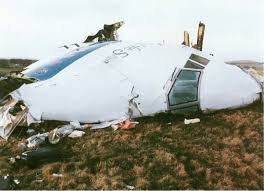
The Tragedy of Pan Am Flight 103: A Day That Changed Aviation Forever
On the evening of December 21, 1988, the world witnessed one of the most devastating acts of aviation terrorism in history. Pan Am Flight 103, a Boeing 747 bound from London to New York, vanished from radar screens over Scotland, plummeting into the quiet town of Lockerbie. The disaster not only resulted in a heartbreaking loss of life but also sparked one of the most complex criminal investigations ever conducted.
What Happened on December 21, 1988?
The flight was carrying 259 people—including passengers and crew—when a sophisticated explosive device, hidden inside a radio-cassette player in a suitcase, detonated. The explosion ripped through the fuselage, causing the aircraft to break apart in mid-air. The debris rained down over the town of Lockerbie and the surrounding countryside, killing all those on board and 11 residents on the ground.
The scale of the devastation was immense, turning a peaceful Scottish community into a global focal point for grief and forensic investigation.
The Investigation: A Global Manhunt
Solving the mystery of Pan Am Flight 103 required an unprecedented collaboration between the Scottish police and the FBI. The investigation spanned several years and continents, focusing on the origin of the suitcase and the nature of the bomb.
- n
- The Evidence: Forensic experts recovered a small fragment of a circuit board and clothing that led investigators to Malta.
- The Accused: The trail eventually led to Libya, with the Libyan government being accused of sponsoring the attack.
- The Verdict: After years of diplomatic tension, Abdelbaset al-Megrahi, a Libyan intelligence officer, was convicted of the bombing in 2001.
How Pan Am Flight 103 Reshaped Aviation Security
The tragedy of Lockerbie served as a wake-up call for the international community. It became evident that existing security measures were insufficient against determined terrorists. As a result, the aviation industry underwent a massive overhaul.
Key changes included the implementation of stricter baggage reconciliation (ensuring that no bag travels unless the passenger is on board) and the enhancement of X-ray scanning technology to detect sophisticated explosive devices. You can learn more about the evolution of flight safety through the International Civil Aviation Organization (ICAO).
Remembering the Victims
Beyond the politics and the forensics, Pan Am Flight 103 is a story of human loss. For decades, families of the victims have sought closure and justice. The memory of the 270 lives lost continues to be honored through memorials in Lockerbie and New York, reminding us of the fragility of peace and the importance of global security.
For a deeper historical dive into the geopolitical climate of the 1980s that contributed to such events, the Encyclopedia Britannica provides comprehensive context.



