
Dramatic F-35B Fighter Jet Crash Shakes MCAS Miramar
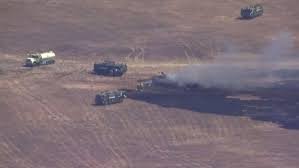
In a startling event that drew attention from miles away, an F-35B Lightning II fighter jet crashed at the Marine Corps Air Station (MCAS) Miramar in California. The incident, captured in harrowing footage by local news affiliates, saw the aircraft erupt into massive flames upon impact, sending plumes of thick smoke billowing into the California sky.
According to reports, the jet went down just short of the base’s runway. Emergency response teams and airport fire crews acted swiftly, deploying firefighting foam to suppress the wreckage and extinguish a grass fire that ignited around the crash site.
Pilot Safety and Recovery
The most critical piece of news following the disaster is the safety of the crew. Reports confirm that the pilot successfully ejected from the aircraft before the impact and has since been recovered. While the pilot’s current condition hasn’t been fully detailed, the successful deployment of the ejection seat likely prevented a tragedy.
What is the F-35B Lightning II?
The aircraft involved is not just any fighter jet. The F-35B is touted by Lockheed Martin as one of the most advanced combat aircraft in the world. It is specifically designed for versatility, offering unique capabilities that set it apart from conventional jets:
- n
- STOVL Capability: It can perform Short Take-Off and Vertical Landing, allowing it to land like a helicopter.
- Global Operation: It is operated by the U.S. Marines, the United Kingdom’s Royal Navy, and the Italian Air Force.
- High Value: Each unit carries a staggering price tag of approximately $102 million.
Investigation Underway
As of now, the exact cause of the F-35 crash remains unknown. The Pentagon and military investigators are expected to analyze the flight data and wreckage to determine whether the incident was caused by mechanical failure, pilot error, or environmental factors.
This incident adds to the ongoing scrutiny of high-cost military aviation programs, where the balance between cutting-edge technology and operational safety is always under the microscope. For more official updates, you can follow the U.S. Marine Corps official communications.



