
SpaceX Falcon 9 Upper Stage Impact: A Rare Scientific Window into the Moon’s Surface
The lunar landscape is about to experience a man-made event of epic proportions. On August 5, a spent SpaceX Falcon 9 upper stage is projected to collide with the Moon at high speed. While it may sound like a cosmic accident, astronomers and planetary scientists are viewing this event as a golden opportunity to unlock secrets about lunar geology and space debris dynamics.
The Collision: What exactly is happening?
The object in question is a leftover stage from a mission launched on January 15, 2025, which delivered the SpaceX-powered Firefly Blue Ghost-1 lander and the Japanese ispace Hakuto-R Mission 2 (Resilience) to the lunar surface. After completing its primary objective, the upper stage remained in orbit until gravity finally pulled it toward the Moon.
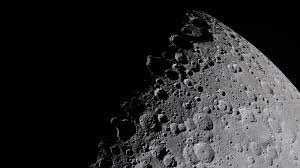
The impact is expected to occur near the Einstein and Bell craters, located on the western lunar limb. This specific location makes it a prime target for both ground-based telescopes and space-based observation assets.
Can we see the impact from Earth?
For the avid stargazer, this event offers a rare thrill. According to a study published on the arXiv open-source server, the resulting impact plume might be bright enough to be visible against the dark lunar sky.
Here are the technical predictions for the impact:
- n
- Plume Altitude: The debris spike is expected to reach between 47 and 60 miles (75 to 100 kilometers) in height.
- Visibility: For the first few minutes, the plume could be several orders of magnitude brighter than the dark-sky background.
- Equipment: While not visible to the naked eye, the flash and ejecta may be detectable with sufficiently sensitive telescopes.
The Science: More than just a flash in the dark
While the visual flash is exciting, the real value lies in the ejecta-plume science. William Jo, a researcher from the University of Texas at Austin, emphasizes that human-made objects—which are often hollow—behave very differently during impact than natural asteroids or comets.
By studying this event, scientists can:
- Calibrate Models: Refine physics simulations for future payloads being delivered to the lunar surface.
- Test Seismic Pipelines: Use the impact to localize surface events, which is crucial for future lunar seismic experiments.
- Assess Hazards: Understand how artificial space debris impacts the moon, which is vital for the safety of future NASA Artemis astronauts and lunar infrastructure.
Monitoring the aftermath
The scientific community isn’t just watching from afar. Brent Garry, a project scientist for NASA’s Lunar Reconnaissance Orbiter (LRO), noted that the LRO will be passing over the projected crash site shortly before and after the event. This allows researchers to get a “before and after” snapshot of the lunar surface, providing invaluable data on the crater’s formation and the spread of debris.
As we push further into the era of commercial space exploration, events like the Falcon 9 upper stage impact serve as a reminder of the footprints we leave behind—and the incredible science we can gather from them.



