
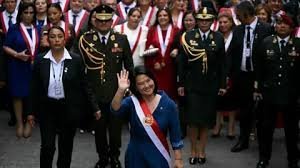
A Historic Milestone in Peruvian Politics
In a landmark moment for South American politics, Keiko Fujimori has officially assumed the presidency of Peru. Marking a historic turning point, she becomes the first woman to reach the nation’s highest office through a direct popular vote. However, her victory is more than just a gender milestone; it signals the return of one of the most influential and polarizing political dynasties in the region.
As the daughter of the late former president Alberto Fujimori, Keiko carries a legacy that is both her greatest political asset and her most significant burden. After three previous unsuccessful attempts in runoff elections, her fourth campaign finally secured the presidency, bringing an end to a period of intense political volatility where Peru saw nine presidents in just a decade.
Breaking the Cycle of Instability
During her inaugural address to Congress, Fujimori was clear about her mission: to end the revolving door of leadership that has plagued the country. “The clock has started to run. The 1,826 days of work for the greatness of our homeland begin right now,” she declared, emphasizing a commitment to stability and governance.
Despite the weight of her family name, Fujimori notably avoided mentioning her father during her speech, focusing instead on a vision of a unified nation. She described Peru as a “vibrant, multicultural, and strong” country, ready to move past its internal divisions.
Top Priorities: Security and Environmental Crisis
President Fujimori inherited a nation she described as being in a “catastrophic” state. To address this, her administration has pinpointed two urgent priorities:
- Citizen Security: With extortion and organized crime suffocating small business owners and transport workers, Fujimori has promised a “deep penitentiary reform” to ensure prisons stop serving as operational hubs for criminal gangs.
- Climate Change and El Niño: Recognizing the devastating impact of weather patterns on vulnerable populations, she announced a National Contingency Plan to move from reactive measures to proactive prevention.
A Right-Wing Shift Across Latin America
Fujimori’s victory is not an isolated event but part of a broader ideological trend. Alongside the rise of right-wing governments in countries like Ecuador and Chile, and the upcoming administration of Abelardo de la Espriella in Colombia, the geopolitical map of Latin America is shifting.
This current wave contrasts sharply with the landscape of early 2023, when several left-leaning governments dominated the region. This shift suggests a growing demand among voters for policies focused on law and order and market-driven economic growth.
Economic Vision and Social Equality
Beyond security, Fujimori aims to tackle Peru’s stark income inequality—which she claims is the highest in Latin America. Her economic strategy includes:
- Reducing the Social Deficit: Implementing programs to combat childhood malnutrition and poverty.
- Labor Formality: Encouraging the transition of informal workers into the formal economy to stimulate sustainable growth.
- State Efficiency: Eliminating bureaucratic hurdles and restoring a merit-based public service system.
To further enhance competitiveness, Fujimori intends to strengthen regional ties through the Pacific Alliance and the Andean Community, ensuring Peru remains a key player in global markets.
The Challenge Ahead
While the applause in Congress was frequent, the road ahead remains challenging. The echoes of protestors calling for “justice for victims” during her inauguration serve as a reminder that the wounds of the past are still open. Whether Keiko Fujimori can bridge these divides while delivering on her promises of safety and prosperity remains the defining question of her presidency.



