
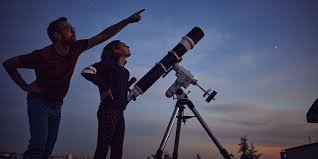
Get Ready for a Cosmic Extravaganza: August’s Night Sky Guide
If you thought the summer heat was the only thing sizzling this August, think again. The cosmos is preparing a breathtaking series of events that will turn the night sky into a natural theater. From rare planetary alignments to the haunting beauty of a Blood Moon, this month is a goldmine for stargazers and astronomy enthusiasts alike.
Whether you have a professional telescope or just a pair of curious eyes, here is everything you need to know to catch these celestial wonders.
The Celestial Dance: Moon and Saturn Conjunction
Kicking off the month on Monday, August 3, the Moon will enter a close conjunction with Saturn. While they may appear to be neighbors in our sky, they remain vast distances apart in the vacuum of space.
- n
- How to watch: Because the distance between them is too wide for most telescopes or binoculars to capture in a single frame, the naked eye is your best tool for this event.
The ‘Planet Parade’: Six Worlds in Alignment
Mark your calendars for August 12. In a rare display of cosmic coordination, six planets—Mercury, Jupiter, Uranus, Saturn, Neptune, and Mars—will align in what astronomers call a “planetary parade.”
To catch this alignment, you’ll need to be an early riser. The best viewing window occurs in the pre-dawn hours. While the majority of these planets are visible without equipment, you’ll need optics to spot the distant Uranus and Neptune.
A Double Feature: Solar Eclipse and the Perseids
August 12 isn’t just about planets; it’s a day of overlapping wonders. A new moon will trigger both total and partial solar eclipses. While the total eclipse will be visible in regions like Greenland, Iceland, and parts of Spain, much of the Northern Hemisphere, including the United States, will experience a partial eclipse.
But the real show starts after dark. From the night of August 12 through August 13, the Perseid meteor shower reaches its peak. Thanks to the new moon providing a darker backdrop, visibility will be exceptional. Expect to see up to 100 shooting stars per hour!
The Grand Finale: The Mysterious Blood Moon
As the month draws to a close, the sky saves its most dramatic performance for last: a deep partial lunar eclipse. This event is what many refer to as a Blood Moon, as the moon takes on a reddish hue when it enters Earth’s shadow.
This particular eclipse will be striking, with 96% of the moon shadowed and darkened, creating a hauntingly beautiful silhouette in the night sky. It is the perfect conclusion to a month of astronomical brilliance.
For more real-time tracking and scientific data on these events, we recommend visiting the official NASA Solar System exploration page to stay updated on the latest discoveries.



